St Columba’s-by-the-Castle Episcopal Church

14 Johnston Terrace, Edinburgh, EH1 2PW
Phone: 0131 622 2277
Email: church.admin@stcs.org.uk

Virtual AND in-person visits this year


Visit in Person

The church will be open to Doors Open Days visitors on Saturday 25th September from 10.30am-3.30pm and on Sunday 26th September from 12pm-3.30pm.

Social distancing and masks will be required. Stewards will be on-hand to ensure safe numbers.


Visit in Person!

Edinburgh and East Lothian Doors Open Days is supported by:

Arnold Clark Community FundHinshelwood Gibson TrustEuropean Heritage DaysScottish Civic TrustUrwin Studio Edinburgh Web Design

Event Sponsor

Greyfriars Kirk

Greyfriars Place, Edinburgh, EH1 2QQ
Phone: 01312251900
Email: communications@greyfriarskirk.com

Virtual AND in-person visits this year


Visit in Person

The Kirk will be open to visitors from 11am to 4pm on Saturday 25th September and from 1pm to 4pm on Sunday 26th September.

Kirkyard tours will also be available from the Friends of Greyfriars Kirkyard.


Visit in Person!

Visit Virtually

Edinburgh and East Lothian Doors Open Days is supported by:

Arnold Clark Community FundHinshelwood Gibson TrustEuropean Heritage DaysScottish Civic TrustUrwin Studio Edinburgh Web Design

Event Sponsor

Edinburgh Low Emission Zone Proposals – Clean air for all?

POSTED ON August 27, 2021

Having supported an Edinburgh-wide low emission zone in 2019 we are extremely concerned the new reduced proposal from the Council will cause significant problems for some city neighbourhoods

Having supported an Edinburgh-wide low emission zone in 2019 we are extremely concerned the new reduced proposal from the Council will cause significant problems for some city neighbourhoods

Support the Cockburn

Donate
Join Us

Low Emission Zone consultation – 2021

Posted on: August 26, 2021

Our official response to the latest City of Edinburgh Council consultation on the implementation of Low Emission Zones in the city

Our official response to the latest City of Edinburgh Council consultation on the implementation of Low Emission Zones in the city

Cockburn Response

The Cockburn Association would wish to make these comments on the Low Emission Zone proposals being consulted upon by the City of Edinburgh Council.

Regretfully, we are unable to support these proposals.

This comes in the context of our full support for the initial LEZ proposed by the Council in July 2019. We supported the introduction of both a City-wide and City-centre LEZs accepting the arguments made at the time that only a holistic approach would prevent current “hot spots” being shifted around the city as general traffic sought ways of avoiding any smaller zone.

With the City of Edinburgh Council’s current commitment for a net zero emission on city by 2030, the LEZ is an opportunity to make changes needed across the City of Edinburgh. The city-centre boundary must be expanded city-wide to avoid displacement of pollution into residential streets and to create a cleaner, healthier city for all residents.

Context

It is important to understand the wider movement trends in order to achieve any satisfactory outcome from an LEZ.  The City Mobility Plan 2021-30 sets out the Council’s vision and policies, aimed largely at reducing pollution and increased the modal shift to active travel.  Edinburgh has a very high pedestrian journey to work percentage, where 40% walk to work in the city centre and 18% walk to work citywide.

In contrast, two-thirds of commuter traffic entering into the city comes from outside the city boundary with 70 % of commuters from other local authorities traveling by car. This compares unfavourable to local commuting, where 33% drive to work.  The related issue of traffic-generated pollution is directly linked origin of traffic.

Some of the main “hotspots” for traffic pollution lie outside the city centre and include Corstorphine High Street and parts of Leith. The current proposals will offer no solution to problems here.  Indeed, they might see even higher levels of pollution as a result.

Current proposals – discussion

The proposal is for a city-centre zone only.

Boundary

The proposed zone excludes Queen Street and the Northern New Town but extends to and includes the Meadows, which seems a bit confused given the objectives of the LEZ.  Indeed, the specific boundary suggests the creation of a de facto inner ring route allowing more polluting vehicles to circumnavigate the LEZ.

The implications for increased rat-running across the city is considerable.  This could be greatest in the residential New Town as a result of the LEZ, where traffic seeking to avoid Queen Street could easily displace into residential streets, exacerbating traffic and pollution displacement issues.  This would be very real outcome and a significant objection to the current LEZ proposals.

We strongly advocate that the northern boundary of the LEZ be altered and extended to include Randolph Crescent and the Moray Feu, and the follow the approximate line of the World Heritage Site boundary. Queen Street would be subsumed into this area.  In this, we do have concerns of further potential displacement into Stockbridge and Inverleith.

We also find the implication of the boundary is that the Morrison Street/A700 (Earl Grey Street, Brougham Street, Melville Drive) corridor becomes the main arterial for polluting traffic heading around the LEZ to/from eastern and southern parts of the city.  Similarly, St Leonard’s and The Pleasance would become the eastern flank of this Inner Ring Route causing considerable increases in air pollution along this corridor.  The potential diversion of traffic onto Queen’s Drive and Holyrood Park (subject to a separate consultation by HES) is also deeply concerning.

All this comes from the lack of a city-wide boundary for the LEZ.  The compact, dense nature of Edinburgh will result in negative impacts for communities on the edge of the centre-boundary LEZ.  This cannot be acceptable.

Indeed, in the Transport & Environment Committee report of 16 May 2019 recognised this.  It states in para 4.17, “there is a risk that a city centre boundary alone may displace polluting vehicles to other areas of the city and exacerbate existing air quality problems.”  This remains a very real and significant risk.

The consultation does not explain why the wider urban area has been deleted and only the city centre included.  This needs to be outlined fully as it contradicts the objectives set out in the paper of 16 May 2019.

Grace Period and Exclusions

A grace period of only two years is proposed although one might argue that two years have passed since first mooted.  Given the economic and other challenges that Covid has created, we believe that this may be too short a period to allow residents and businesses to transition to other vehicle types.

The LEZ also includes a list of vehicles exempted from the controls including military and emergency vehicles.  Less clear is why historic vehicles are exempt (manufactured or registered at least 30 years or historically preserved in its original state).  We can see no logic in this given the objectives of the LEZ.

Summary

As stated above, the Cockburn Association is unable to support these proposals.

We call for the dual LEZ proposals as outlined in 2019 to be reinstated, and offer the following suggestions as a way of improving the proposals.

  • High trafficked streets such as Queen Street, Melville Drive, Morrison Street and Picardy Place should be included with in the LEZ city-centre boundary.
  • Further consideration to inclusion of residential New Town Areas (as suggested initially by NTBCC) and especially those sections subject to high volumes of traffic or potential rat-runs through residential areas (e.g., section east of Dundas Street to London Road and Broughton Street).
  • In all this, the avoidance of creating an “inner ring route” must be a guiding principle.
  • We also challenge vehicle exceptions for historic vehicles as they tend to be more polluting.

Addendum: Extract of Cockburn’s previous comments – July 2019

Do you support the proposed boundary for the City Centre LEZ?

Yes, in part. The Cockburn Association accepts the reasoning to expand the zone beyond the current “hot spots” identified in the consultation in order to avoid displacement. In this regard, we believe that the suggestion from the New Town and Broughton Community Council to extend the northern boundary to include most of the residential New Town has some merit and might help prevent some displacement from city centre traffic.

City centre vehicle types in the City Centre LEZ should apply to Buses/coaches, HGVs/LGV/Vans, Taxi/private hire cars, Cars, Motorbikes.

Proposed Grace Periods – The Cockburn supported the following grace periods – 1 year for buses and coaches; 1 year for commercial vehicles; 4 years for private cars; and 5 years for city centre residents with cars.

City-wide LEZ – Do you agree with the proposed boundary for the City-wide LEZ?

Yes in part. Again, there is a logic in a holistic boundary approach which will make it easier to understand and potentially simplify the management and enforcement. As with the City Centre boundary, infrastructure will be required to enforce the zone and we presume that some sort of registration plate recognition system will be put in place. This begs the question of whether Congestion Charging would be a more useful tool rather than a simple in/out zone. Some aspects of the boundary should be revised. Whilst we appreciate the local authority boundary issues, logically, the whole of the City Bypass should be taken as the boundary for the LEZ. This will require the cooperation of East Lothian Council but from a users’ perspective, there is no distinction in Council border in the south-east quarter of the city in travel terms.

City-wide LEZ vehicle types in the city-wide LEZ should apply to Buses/coaches, HGVs/LGV/Vans.  We supported a grace period for this as 3 years for buses and coaches and 3 years for commercial vehicles.

Do you anticipate any unintended consequences from Edinburgh’s LEZ proposals?

Yes. The implications of this for Edinburgh’s hinterland is considerable. Significant investment in sustainable transport systems will be required to ensure that the City Region functions. We see no evidence of this scale of planning in place. Given that almost 70% of commuter journeys from neighbouring local authority areas is by car, simply pulling up the drawbridge (metaphorically speaking) will cause serious issues. Although the period of grace will help, there will be a financial penalty for people who have invested in diesel cars especially. Recent evidence shows that the shift back from diesel has resulted in the first UK increase in CO2 in the past decade. We suggest that the Council invests in a detailed study of how cars are used in the city, segmenting external and internal traffic. We would be happy to discuss this further.

Demolition and Replacement of Rosebery House

Posted on: August 25, 2021

Our objection to the demolition and replacement of Rosebery House in Haymarket with a bland, taller and wholly inappropriate new office block

Our objection to the demolition and replacement of Rosebery House in Haymarket with a bland, taller and wholly inappropriate new office block

Cockburn Response

The Cockburn OBJECTS to this application.

It is the Cockburn’s view that the current proposals are too tall, too bulky, bland and inappropriate for its largely residential context on the edge of the city centre.

The absence of any evidence in the application relating to the potential to refurbish rather than demolish an apparently functional office building is unacceptable, particularly in the context of Edinburgh’s high profile carbon neutrality targets. Evidence should be provided that the existing office block cannot be reconfigured to meet modern office working requirements and cannot be brought up to an acceptable energy performance standard so avoiding the significant carbon implications of demolition and rebuild.

Refurbishment must now be the starting point of any significant office redevelopment if Edinburgh’s commitment to tackling the climate emergency and achieving carbon neutrality by 2030 is to have any meaning. Successful refurbishment and reuse may have the potential to deliver some or all of the stimulus to the growth of the local, regional and national economy and  opportunities for employment in Edinburgh which are claimed for this redevelopment.

The developer appears not to have sufficiently considered the scale and setting of their proposed building and appears to be  attempting the maximise the amount of office accommodation that can be crammed onto  limited and constrained development footprint.

The developer’s assertion that the proposed building’s design will enhance the relationship of the site with the New Town Conservation Area and the Old and New Towns of Edinburgh World Heritage Site is, we believe, difficult to justify.  We believe that, for example, the architectural language of the New Town or of the remaining industrial heritage of Haymarket is not, as asserted, significantly evident in the  proposed design.

We are also concerned that the height and mass of the proposed building will create a ‘canyoning’ effect on adjacent approaches to Haymarket Station which will exacerbate existing noise, and particularly, air quality issues.

If the principle if demolition is accepted (and we believe that there is  insufficient evidence to support this) then redevelopment in this location should be limited to around four stories with a sympathetic roof structure in keeping with the surrounding cityscape, rooflines and residential character of much of this area.

The proposed design does improve some aspects of the public realm, particularly in relation to the local trams stops. But on such a constrained site it has clearly proved impossible to provide significant accessible greenspace  at street level.  Moreover, it is our view that the design overall is too tall, too bulky, bland and inappropriate for its largely residential context. As such it will significantly detract from the local area’s public realm and create an incongruous  point of arrival into the Haymarket area and city centre and will negatively impact on views to and from the city centre.

Fly Open Air Music Festival in West Princes Street Gardens

Posted on: August 23, 2021

Our response to the Council’s request for comments about another commercial event being held Princes Street Gardens

Our response to the Council’s request for comments about another commercial event being held Princes Street Gardens

Cockburn Response

The Cockburn through its long history has campaigned to protect Edinburgh’s parks and open spaces including West Princes Street Gardens. We appreciate the desire of the hospitality and events sectors to get back into operation following the enforced closure due to Covid. However, Covid as allowed us to reassess the importance of open spaces to the health and well-being of the city for its residents and visitors.

Our view is that West Princes Street Gardens is a public park, not a private events space. We hold no position on the type of activities or events that are or are not appropriate.  The issue is the impact on a public civic space in terms of accessibility, suitability and well-being in the widest sense.  All public attitude surveys since the late 1990s have shown that the two characteristics of West Princes Street Gardens valued the most by the public are its green-ness and its tranquillity.  This event, and others similar to it, are not consistent with these values.

We therefore object to this event (FLY Open Air) on the grounds that it takes over one of the capital’s premier public spaces, barring entry to it for a substantial and significant period (with set up and take down times added to the event itself) to all except those whom a commercial operator decides can gain access.  Ultimately, it is a private event that has at its core the need to offer exclusivity to ticket purchasers at the expense of public access and enjoyment.

In addition to this principle, we have several concerns which we outline below:

  • The use of the central part of WPSG will result in the inability of the public to move across the gardens unimpeded.  The proposals will effectively divide WPSG into two disconnected sections during times of operation.  This should be avoided with the public able to move from one area to another as freely as possible.
  • No times of operation are shown, thereby allowing the operator to restrict access for periods that are unnecessary.
  • The suggestion that concert users will be required to undertake a Lateral Flow test, stationed on King Stables Road suggests significant queuing issues off site, for which no management information is available.
  • The main access points, proposed for Lothian Road, presents substantial congestion issues during peak use.  Lothian Road is a major route with important bus stances beside the proposed main entrance.  Pedestrian congestion could be a safety issue.
  • There is no information on tree management or restoration requirements post the event.  A tick box asking if the applicant is aware of the Council’s policies is wholly inadequate and provides no assurance that these will be enforced given experience elsewhere in the City. Details should be included in the application.
  • We object to the proposed pop-up food and drink facilities.  It is essential that as part of the City’s Covid recovery strategy that we support existing local businesses who operate 365 days a year in the city, and not allow unfair competition from operators who are only tied to this event.
  • The event will be heavy in infrastructure, which will damage the soft landscaping. The site plan also suggests that structures will be placed over tree root systems, causing soil compaction and possible significant damage to the treescape.  This needs to be assessed before any consent can be granted.

Whilst we appreciate that the events sector is keen to hold such events for its customers, the Council should not allow land that is held as a Public Good to be used in this way.


Juniper Green Telecoms Mast Installation Application

Posted on: August 20, 2021

The Cockburn Association supports local stakeholders’ considered objections to the proposed installation of a telephone mast in an Edinburgh Conservation Area

The Cockburn Association supports local stakeholders’ considered objections to the proposed installation of a telephone mast in an Edinburgh Conservation Area

Cockburn Response

The Cockburn OBJECTS to this application.

This application has been brought to the Cockburn’s attention by concerned local stakeholders. The proposed telecommunications equipment would result in excessive visual clutter within the streetscape.

The proposal would have a harmful impact upon the visual quality of the wider street scene and so detract from the amenity and special character of the conservation area as a whole. It is our view that the application is not consistent with Policy Env 6 Conservation Areas – Development as it does not preserve or enhance the special character or appearance of the conservation area.

This application should certainly be refused if it is determined that the benefits of the proposed installation are deemed not to outweigh the harm caused  to the conservation area and if there is insufficient evidence that alternative sites or mast sharing opportunities have been adequately explored.

In consultation with local stakeholders the proposed apparatus should be located in a more inconspicuous location.


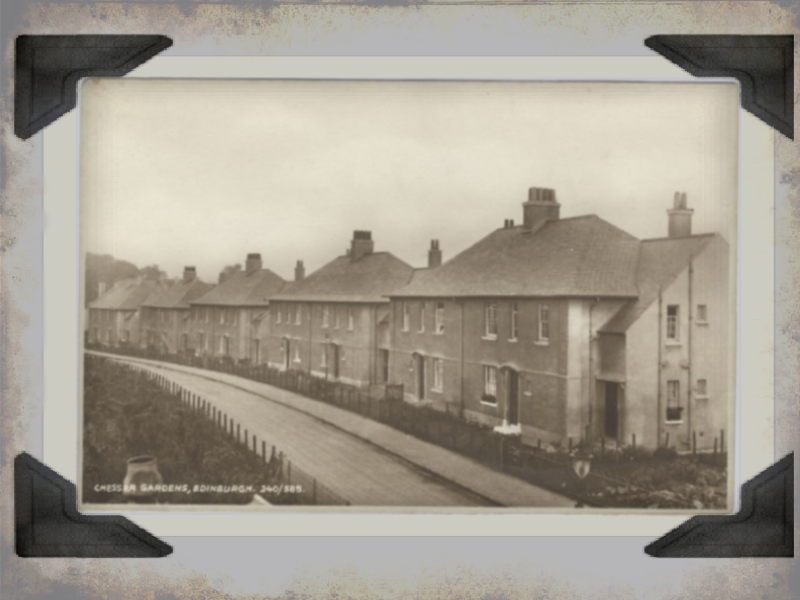
“Homes Fit for Heroes“ – The Edinburgh Experience

POSTED ON August 19, 2021 BY Lou Rosenburg

Urban historian Lou Rosenburg, author of “Scotland’s Homes Fit for Heroes”, gives us an account of Edinburgh’s municipal house-building activities shortly after World War One.

Urban historian Lou Rosenburg, author of “Scotland’s Homes Fit for Heroes”, gives us an account of Edinburgh’s municipal house-building activities shortly after World War One.

Support the Cockburn

Donate
Join Us

Opening Doors to Edinburgh’s New Town’s Past

Thursday 23 September 2021 from 5-6pm

Join Dr Anthony Lewis, Curator of Scottish History for Glasgow Life Museums, on Zoom in this talk hosted by the National Records of Scotland which will focus on some of the possible motivations for enlarging and improving Edinburgh in the first half of the 1700s. It will refer to HM General Register House itself as a key building in this …

Book Here

Malicious Mischief? Women’s Suffrage in Scotland

Wed 25 August 2021 at 7pm

Join archivist Jocelyn Grant on Zoom for a free talk about the women’s suffrage movement in Scotland, looking primarily at the period before 1918. Drawing on the archives of the National Records of Scotland (NRS), Jocelyn will show how this period is represented in criminal case files, government reports, diaries and newspapers. In particular the talk will cover the difference …

Book Here