Lawrence Weaver and the Romance of Scottish Architecture

Monday, October 13

‘the first architectural critic in the modern sense of the word’.

Book Here

Granton Station Platforms

Posted on: September 10, 2025

Positive reuse, though heritage interpretation absent.

Positive reuse, though heritage interpretation absent.

Cockburn Response

The proposal to convert the disused railway platforms beside the B-listed Granton Station Creative Works into landscaped planters with gravel surfaces and public artworks is recognised as a continuation of the area’s cultural regeneration. The former station building, restored and reopened as an artist-led creative hub, has already become a focal point for local creative activity and forms part of the wider Granton Waterfront regeneration. In this context, revitalising the platforms  with planting and artworks offers a sensitive way of extending the life of the site and enhancing the public realm around Station Square.

While the ambition of the scheme is welcomed, it is regrettable that the proposals do not incorporate any interpretation of the site’s railway heritage. Such elements could help to connect the creative re-use of the building and platforms more directly with the history of Granton’s industrial past, enriching the experience for visitors and local communities alike. It is also important to emphasise the need for good long-term maintenance of both the planting and any artworks to ensure that the quality of the environment is sustained and the benefits of the project are secured into the future.

Causewayside PBSA

Posted on: September 9, 2025

Enhanced design delivers stronger Causewayside street presence

Enhanced design delivers stronger Causewayside street presence

Cockburn Response

The Cockburn Association supported the previous application on this site and welcomes the further revisions now proposed. In particular, we appreciate the move to address earlier concerns regarding the dominance of studio flats, with the initial proportion of 63% now reduced to 17 units (below 10% of the total), in line with Council policy. This adjustment will help ensure more positive health and wellbeing outcomes for future residents. We especially welcome the delivery of an active street frontage, which strengthens the relationship with the surrounding streetscape and contributes positively to the character of Causewayside. Supported by improvements in overall design quality, landscaping, and sustainability measures, these revisions represent a more balanced and sensitive response to the site, and we are content to support the application.

Advocate’s Close

Posted on: September 5, 2025

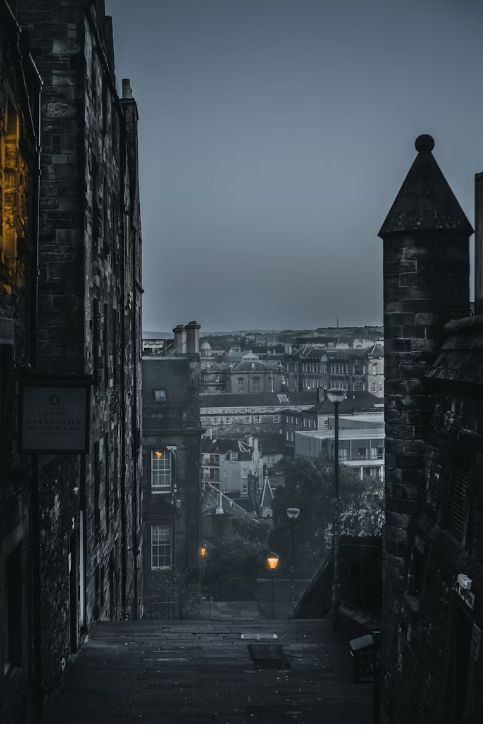
Poor design quality causing unacceptable harm to heritage setting

Poor design quality causing unacceptable harm to heritage setting

Cockburn Response

The Cockburn Association objects strongly to this application. The proposal’s poor design quality fails to respect its sensitive historic setting and is in direct conflict with the City Plan 2030 and the statutory duties under the Planning (Listed Buildings and Conservation Areas) (Scotland) Act 1997.

The development is contrary to Policy Des 1 (Design Quality and Context), which requires proposals to be of a high design standard and to respond sensitively to their setting. Instead, the scheme introduces inappropriate scale, bulk, and detailing that erodes rather than reinforces the character of the Old Town. It also fails to meet Policy Des 3 (Design in Conservation Areas and World Heritage Sites), which requires development to preserve or enhance the special character and appearance of these nationally and internationally significant designations.

Furthermore, the proposal conflicts with Policy Env 9 (World Heritage Sites) by undermining the Outstanding Universal Value, authenticity, and integrity of the Edinburgh World Heritage Site. The harm extends to the setting of surrounding A-listed buildings, contrary to the requirements set out in Appendix D (Technical Requirements), which emphasises that all proposals must fully understand and preserve or enhance the setting of listed buildings and conservation areas.

The statutory duty under Sections 14 and 64 of the Planning (Listed Buildings and Conservation Areas) (Scotland) Act 1997 reinforces these requirements, obliging decision-makers to pay special regard to the desirability of preserving listed buildings and the character or appearance of conservation areas. This duty has not been met.

Equally concerning is the absence of a comprehensive Heritage Impact Assessment and a comprehensive selection of verified visual studies, which are essential for assessing proposals in the context of the World Heritage Site and the Old Town Conservation Area. This omission makes it impossible to demonstrate compliance with the above policies or to understand the true impact on the skyline, townscape, and historic setting.

Taken together, poor design quality, direct conflict with Policies Des 1, Des 3, Env 9, and Appendix D, and the absence of required heritage assessments, this proposal is fundamentally unsuitable for its location. The Cockburn Association therefore urges the Council to refuse consent.


Convenience at a Cost? Calton Hill, the National Monument, and the Question of Dignity

POSTED ON  BY James Garry

Calton Hill: iconic, historic, yet lacking permanent public facilities

Calton Hill: iconic, historic, yet lacking permanent public facilities

Support the Cockburn

Donate
Join Us

Edinburgh’s Historic Bridges: A Heritage at Risk

POSTED ON August 27, 2025 BY James Garry

Trams mustn’t compromise Edinburgh’s fragile historic bridges

Trams mustn’t compromise Edinburgh’s fragile historic bridges

Support the Cockburn

Donate
Join Us

Explore Edinburgh’s Heritage via the Cockburn Collections

POSTED ON August 26, 2025 BY James Garry

Browse the catalogue online or explore PDFs on our site

Browse the catalogue online or explore PDFs on our site

Support the Cockburn

Donate
Join Us

Help Shape Edinburgh’s Tram Future

POSTED ON August 25, 2025 BY James Garry

A city growing fast needs thoughtful, people-focused transport planning

A city growing fast needs thoughtful, people-focused transport planning

Support the Cockburn

Donate
Join Us

Need to make repairs to your tenement?

POSTED ON August 24, 2025

ORGANISING repairs in an Edinburgh tenement building can be tricky.

ORGANISING repairs in an Edinburgh tenement building can be tricky.

Support the Cockburn

Donate
Join Us

Henderson Row

Posted on: August 22, 2025

Overscaled, ill-proportioned mansard roof harms the New Town Conservation Area, contrary to City Plan 2030 Policy Env 14 and NPF4 Policy 7, despite housing need

Overscaled, ill-proportioned mansard roof harms the New Town Conservation Area, contrary to City Plan 2030 Policy Env 14 and NPF4 Policy 7, despite housing need

Cockburn Response

The Cockburn Association objects to the planning proposal for 57 Henderson Row.

The site itself embodies a layered history that reflects both Edinburgh’s industrial evolution and a thoughtful alignment with its architectural context. Mid‑Victorian ambitions to extend the Second New Town gave way to industrial and commercial uses. Workshops, foundries, small factories and shops were built tightly to the pavements along Dundas Street and Fettes Row, adapting to a sloping site that could not have supported the regular street pattern of the Georgian New Town. A brief attempt in 1880 to re‑imagine the space for tenements, to designs by John Lessels, was abandoned. Instead, by the mid‑1880s, the site became home to a landmark cable‑tram depot, elegantly designed in ashlar stone by engineer William Hamilton Beattie, with a handsome two‑storey central engine house, wings providing staff housing. The depot served the tram system, later a bus garage, and was adapted in the 1920s into a police garage, a public wash‑house and electricity substation. In the late 1980s, Scottish Life acquired the site, carefully incorporating the depot fragment as the centrepiece of a granite‑toned “neo‑Second Empire” office development, sensitively balancing post‑modern flourishes with the memory of the historic depot.

Against this layered and thoughtfully adapted architectural fabric stands the current proposal: a lumpen, grossly ill‑proportioned double mansard roof extension that obliterates the composition of the building. It overwhelms the refined massing inherited from both its Georgian context and the carefully situated late‑20th century addition. Far from complementing the existing structure, the proposal crashes into its form with ill-considered bulk and bewildering scale. The effect is not only inelegant but jarringly discordant, detrimental to the harmony of the New Town Conservation Area.

This harm is compounded by the lack of verified visual assessments from critical vantage points such as Calton Hill or nearby Georgian and Edwardian streets. Without these, the full impact of this dissonant roofline on the Conservation Area and adjacent World Heritage Site and skyline cannot be judged. Experience and best practice underscore the necessity of such documentation in development proposals affecting sensitive heritage zones such as this.

City Plan 2030 Policy Env 14 requires that new development, extensions, and alterations within conservation areas must preserve or enhance their special architectural and historic character. Proposals must respect scale, form, materials, and setting, and avoid adverse impacts on the historic environment. The current proposal manifestly fails these requirements, as the double mansard roof would introduce a lumpen, ill-proportioned form that overwhelms the building’s composition and damages the character of the New Town Conservation Area. Policy Env 14 aligns with NPF4 Policy 7 (Historic Assets and Places), this is not just a local but also a national policy concern.

The Cockburn Association’s acknowledges, and supports, Edinburgh’s housing emergency. While we strongly advocate for quality, sustainable housing, and have repeatedly emphasised the urgency of delivering this, poorly conceived development that damages the character and setting of a heritage area cannot be tolerated. Approving this submission would send a damaging precedent: an invitation to sacrifice architectural integrity beneath the guise of delivering homes.

For these reasons, we oppose the application in its current form. We urge the Council to insist upon verified contextual views, substantial reduction in roof mass, and a redesign that harmonizes with both the original building’s scale and the composition of adjacent Georgian and Edwardian streets, thereby honouring the New Town’s heritage while still enabling appropriate housing delivery.