Historic Building Legislation and Curtilage in Scotland
Friday, Jan 23
One-day seminar on Scottish historic building law and curtilage.

One-day seminar on Scottish historic building law and curtilage.
Heritage, resources, and sustainability: conserving the past amid environmental change.

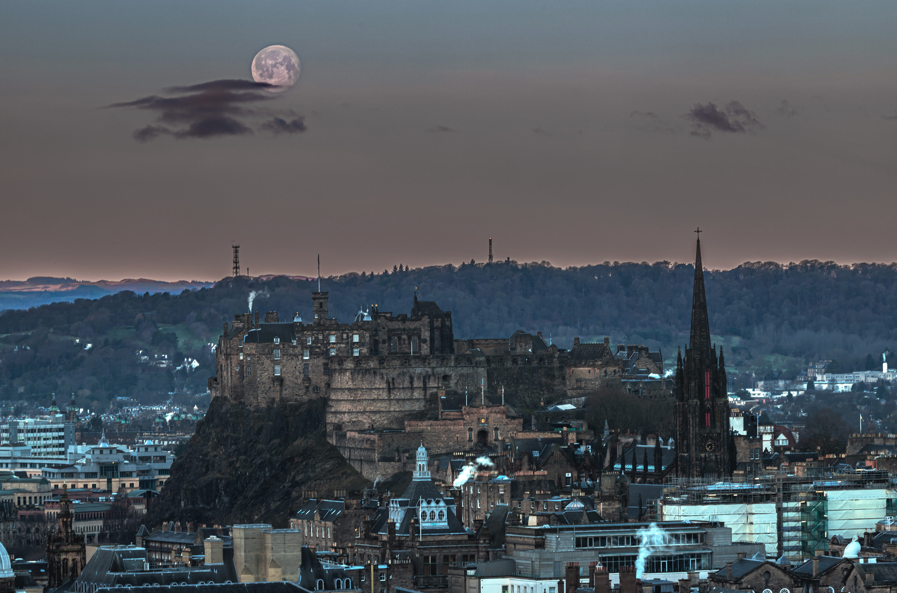
Forty years’ research reveals Edinburgh Castle’s lost royal lodgings.

Support extra-care use, but scale, tree loss, impacts unacceptable.
Support extra-care use, but scale, tree loss, impacts unacceptable.
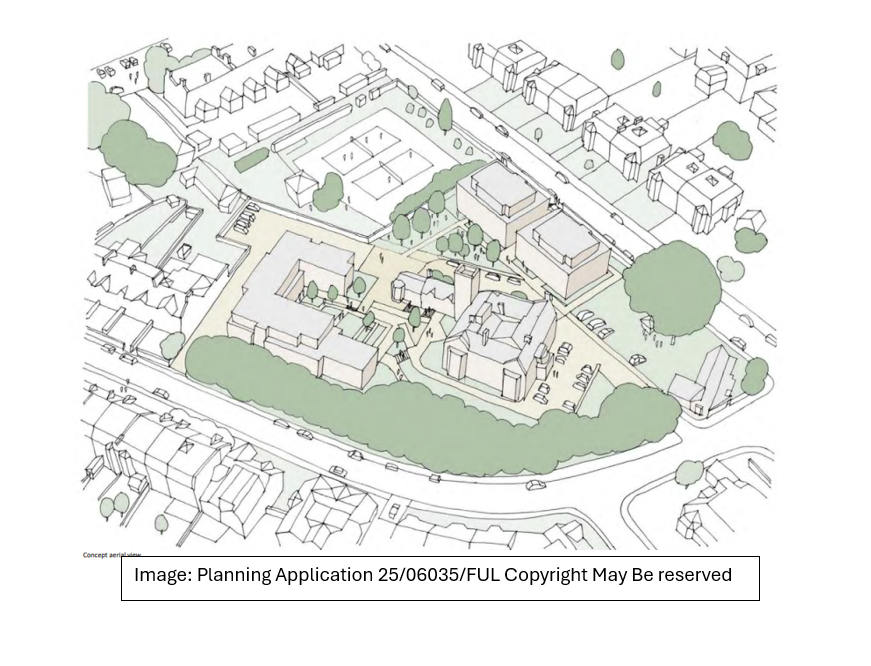
The Cockburn Association welcomes the opportunity to comment on this proposal for an extra-care community at 11–15 Coltbridge Terrace. We recognise the social value of providing accommodation that allows people to live independently with support, and we appreciate the intention to bring the C-listed Lansdowne House back into meaningful use. The removal of later additions of little merit, together with plans to repair the house and retain the Gate Lodge, is encouraging and reflects a heritage-led approach that we support in principle.
However, despite these positive elements, we are concerned that the overall scale and intensity of the development goes well beyond what this sensitive site and its Conservation Area setting can comfortably accommodate. The new buildings proposed along Henderland Road and within the former grounds of Lansdowne House are substantial structures. Even with attempts to break up the rooflines or to step back upper storeys, they read not as villas but as modern multi-unit apartment blocks, and their combined mass diminishes the visual prominence of the listed building, which was historically the centrepiece of its landscape. The grain of the area, consisting of large villas in generous, well-treed grounds, does not naturally lend itself to the level of built form now proposed.
This point is closely tied to the landscape impacts, and here the proposals raise particular alarm. The removal of 29 trees, including several Category A and B specimens, is a significant change to the character of the Conservation Area. These mature trees form an essential part of the visual and environmental fabric of Coltbridge and Wester Coates. While replacement planting is offered and canopy calculations are provided, it is difficult to accept that saplings will, in the short or medium term, compensate for the loss of mature canopy that has defined this corner of the city for generations. A Conservation Area is designated in recognition of such qualities, and once they are eroded they are not easily restored.
Although the landscape plans are attractively presented, the cumulative effect of the works, including regrading, engineered surfaces, a sizeable access route and new terraces, shifts the character from that of a historic villa garden towards something more akin to a semi-urban compound. In winter, when foliage is thin, the new Building C will be considerably more visible from Coltbridge Terrace than suggested by the submitted images. Despite sitting broadly on the footprint of Lansdowne Modern, it appears taller and more assertive in scale, altering the pleasant openness that has long characterised this part of the street.
There are also concerns about circulation and the demands placed on surrounding roads. Extra-care accommodation, even with limited parking, typically generates frequent staff, visitor and service trips. Coltbridge Terrace is narrow, with limited capacity for manoeuvring service vehicles, and it is hard to see how this increased intensity of movement would sit comfortably here. The internal shared-surface design may function within the development, but it risks creating a level of activity unfamiliar to a quiet residential enclave.
Taken together, the scheme suggests a level of intensification that is at odds with the established character of the Conservation Area. We are mindful too of precedent. Approving proposals of this scale risks inviting similar forms of overdevelopment elsewhere in the wider Murrayfield and Wester Coates area. Conservation Areas rely on clear, consistent expectations about density, built form and landscape character. If those expectations are diluted here, it becomes more challenging to defend them elsewhere.
Although the sustainability documentation is extensive and contains a number of positive measures, the project remains heavily reliant on substantial demolition and new-build construction, with a consequential embodied carbon burden. A more modest approach, one that retains more of the existing landscape, reduces building mass and places greater emphasis on sensitive adaptation, would sit more comfortably with the aspirations of NPF4 and with the long-standing civic desire to conserve the character of this part of the city.
For these reasons, while we support the restoration of Lansdowne House and accept the principle of an extra-care use, we believe the development as currently conceived is too large and too impactful for its location. We would encourage a significant reduction in scale and massing, a more ambitious retention of mature trees and a landscape approach that restores the spacious, leafy character for which the Conservation Area is valued. Without these revisions, we are unable to support the application.
Support adaptive reuse of Granton lighthouse with conservation, interpretation, safeguards.
Support adaptive reuse of Granton lighthouse with conservation, interpretation, safeguards.
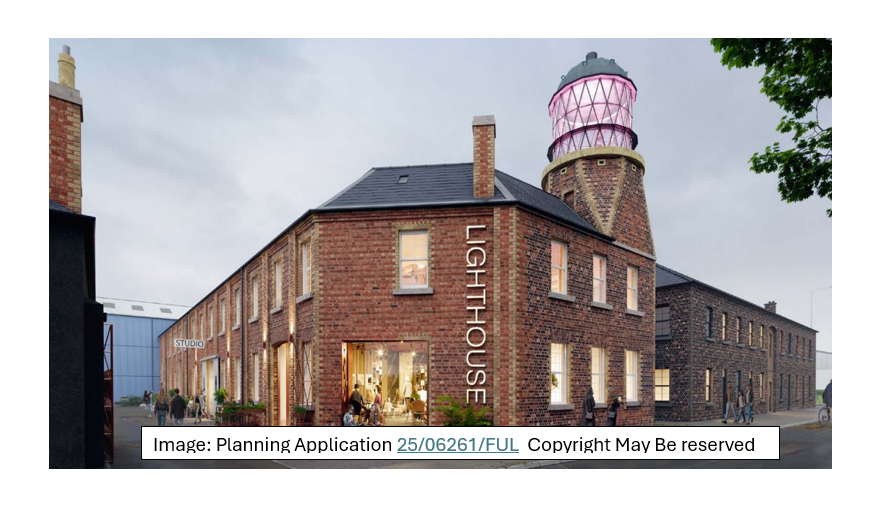
The Cockburn Association welcomes the opportunity to comment on the proposals for the former Northern Lighthouse Board depot at Granton. This is a building of rare historic character whose distinctive industrial form has long served as a familiar marker along West Harbour Road. Much of its history, from the Stevenson engineers’ involvement to the experimental work undertaken by the Northern Lighthouse Board, remains legible in the surviving fabric. For this reason we agree with the accompanying heritage assessment that the structure is of greater significance than its present Category C listing suggests, and we welcome the care that has gone into tracing its evolution. We consider it essential that this rich and layered history is made legible to future users and visitors through well-considered, permanent onsite interpretation embedded within the project from the outset.
In principle, we support the aim of bringing the building back into productive use. Its long period of underinvestment has left it vulnerable; the current proposals offer the best chance in many years of securing its future while opening it up to the neighbourhood. The partnership with Out of the Blue has clear potential. Creative workspaces, rehearsal studios, and a publicly accessible café and exhibition area seem well judged for a building of this sort and for a district whose new population is growing quickly. The prospect of some public access to the lantern, handled carefully, would give the lighthouse a renewed civic role without compromising its fabric, particularly if accompanied by interpretation that explains its technological, social and maritime significance.
The approach to conservation and repair appears generally sound. We are pleased to see a commitment to repair rather than replace, including reinstating lost slate roofs, refurbishing the lantern, and retaining the cast-iron columns and other early fittings that give the interiors their distinctive atmosphere. We do, however, believe that more weight should be placed on securing appropriate conservation techniques through planning conditions. The building has previously suffered from hard cement pointing and other intrusive interventions, and there is a risk that poorly specified work could do further harm. A clear method statement, approved in advance by the Council’s conservation team, would help ensure that the repairs genuinely enhance the building’s long-term health.
The proposal to introduce a new shopfront to West Harbour Road and to remove the unsightly palisade fencing at the entrance is a welcome improvement. At present, the approach to the site is forbidding. The new arrangement should provide a more legible and inviting threshold, although we would encourage careful scrutiny of the detailed design. The laser-cut metalwork and contemporary reveal have some merit as modern insertions, but unless handled with restraint they could sit somewhat awkwardly alongside the robust industrial character of the original building. It is important that the new elements feel subordinate and that any signage or illumination is modest. The lantern, if lit at night, should be treated gently to avoid glare across the wider harbour landscape.
The public realm within the courtyard also deserves close attention. The drawings suggest that it will remain a working yard accommodating movement to the property to the south. At the same time, it is presented as part of a developing network of public routes between future residential blocks. There is nothing necessarily contradictory in this, but the arrangement must be very clear. Pedestrians should not feel as though they are entering a service yard by mistake, and those working on the site should not face avoidable conflicts with delivery vehicles or visitors. A coherent and clearly marked shared-surface strategy would help, ideally supported by subtle interpretive cues that reinforce the site’s historic identity rather than treating the space as purely transitional.
We welcome the commitment to improve access within the building, especially a new lift to the upper floor. We recognise that the historic layout makes full step-free access impossible, but simple interpretive measures for those unable to climb to the lantern would allow more people to appreciate the building’s story and significance. The quality of internal wayfinding will also matter, particularly where several uses overlap and the building has more than one entrance. Ensuring that the main route is obvious, accessible and interpretively coherent should be a priority.
The environmental strategy is one of the strongest aspects of the submission. Retrofitting historic structures of this age and type is seldom straightforward, yet the choice to retain the existing fabric, introduce breathable insulation, and avoid unnecessary replacement is very welcome. The adoption of air source heat pumps and discreet solar panels is sensible and reflects the wider ambitions for a low-carbon Granton Waterfront. We would simply encourage the Council to satisfy itself that overheating risk in the upper spaces, particularly those with enlarged rooflights, has been properly tested, and that maintenance arrangements for the PV panels and gutters can be carried out safely without compromising the building fabric.
Noise is likely to be the most sensitive operational issue, given the continuation of music rehearsal and recording uses and the proximity of emerging residential development. We note the applicant’s intention to undertake a fuller assessment and would expect the Council to require this before works begin. Conditions governing plant noise, studio breakout, and hours of late-evening activity would be advisable. The café element will bring welcome animation but should be managed so that deliveries, waste collection and any evening events do not cause avoidable nuisance.
One area of continuing concern is the exclusion of the storekeeper’s cottage from the present application. While we understand that the boundary line may be pragmatic, the cottage and the main complex clearly read as a single historic ensemble. We regret that the current proposals do not extend to the cottage, as fragmenting their treatment risks a future mismatch in tone, quality or conservation approach. It would be helpful if the Council sought clear assurance that any subsequent proposals for the cottage will be developed in parallel, follow the same conservation-led principles, and contribute positively to the understanding and integrity of the site as a whole.
Taken as a whole, the proposals represent a thoughtful attempt to secure the long-term future of a highly distinctive historic building. They offer a realistic balance between conservation, public benefit and environmental responsibility, and they appear capable of giving the lighthouse a renewed place within the life of the growing Granton community. Subject to conditions ensuring appropriate conservation techniques, careful detailing of new elements, firm noise controls, a clear and well-integrated onsite interpretation strategy, and a properly coordinated approach to the wider site, we would support the granting of consent.
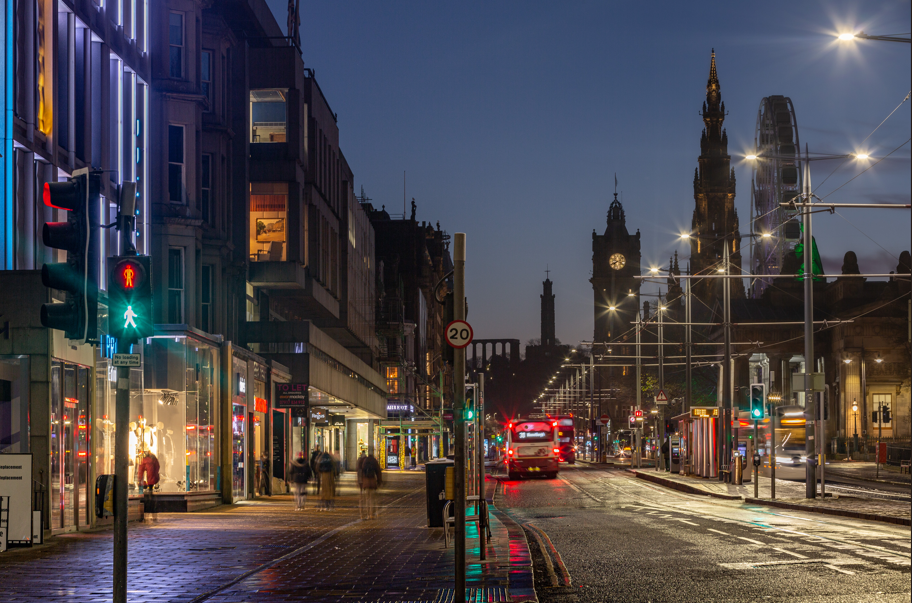
Princes Street’s evolving character reflects shifting visions of urban life
Over dominant student block threatens townscape, protected views and housing balance
Over dominant student block threatens townscape, protected views and housing balance
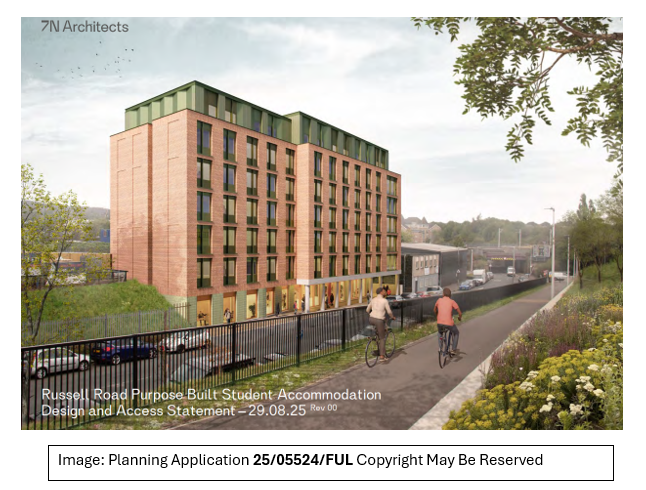
The Cockburn Association has reviewed the proposal for the demolition of existing buildings and the development of purpose-built student accommodation at 36 Russell Road. While we appreciate the intention to bring the site back into productive use, we cannot support the application in its current form.
At seven storeys and approximately 25 metres in height, the proposed building would be overly dominant within its setting and out of keeping with the surrounding townscape. Its form, massing, and roofline have not been convincingly justified and would risk appearing intrusive when viewed from neighbouring streets and from key protected views looking into the city centre. Before any scheme progresses, a more robust visual impact assessment is required to demonstrate that the proposal will not compromise Edinburgh’s valued skyline or wider landscape setting.
We are also concerned that this application will, in effect, set the parameters for how the rest of the adjacent site comes forward. In the absence of an agreed masterplan, piecemeal development risks undermining the potential for a coherent, well-designed neighbourhood. A site-wide masterplanning approach would provide clearer guidance on height, density, movement, public realm, and the mix of uses appropriate for this location, ensuring better long-term outcomes.
The site sits within easy walking distance of active travel routes, rail connections, and frequent bus services. Its highly accessible location makes it well suited for mixed-tenure, affordable or lower-cost housing that would support long-term residents and contribute to a more balanced and sustainable community. The exclusive focus on student accommodation fails to take advantage of this opportunity.
We further note that Edinburgh continues to face significant pressure from an expanding pipeline of student accommodation. A detailed, citywide assessment of supply, demand, distribution, and emerging trends is still required to guide decision-making. Until such evidence is available, approving additional large-scale, single-use student blocks risks exacerbating existing imbalances in local housing markets.
Although most rooms in the proposal are designed as cluster flats, the scheme as a whole offers little in the way of wider community benefit, usable amenity space, or meaningful integration with its surroundings. Given its scale, density, and narrow land use, we remain unconvinced that the proposal represents the best use of this strategically located site.
For these reasons, the Cockburn Association objects to the proposal as submitted.