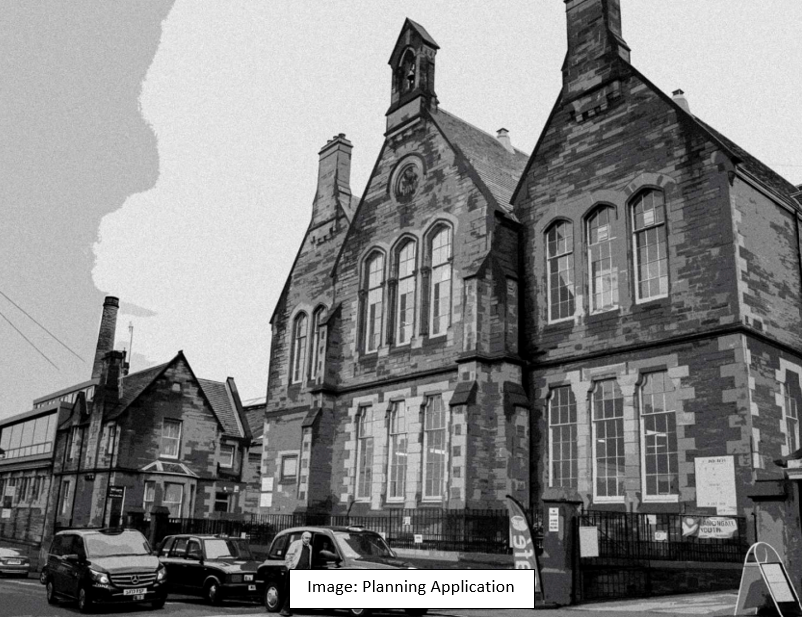
Edinburgh Park Arena

Posted on: March 8, 2024

The Association has long advocated the development of a larger-scale indoor arena

The Association has long advocated the development of a larger-scale indoor arena

Cockburn Response

The Cockburn Association supports this application.


The Association has long advocated the development of a larger-scale indoor arena on the outskirts of the city to compliment the range of indoor and outdoor venues currently available across the city.


This proposal is well placed to take advantage of sustainable transport modes and we commend the developer’s commitment to reducing both embodied carbon during construction and operational carbon post construction.


Overall, if approved, this development should support, diversify and grow the city’s entertainment and conference economy while taking pressure of the city’s public openspace and greenspace sites which are currently used in a less tan sustainable manner as temporary venues.

West Town PPP

Posted on:

The Association believes that a “total development” approach is required here

The Association believes that a “total development” approach is required here

Cockburn Response

Background


This PPP application represents one of the largest set piece urban expansion projects in the city for the past 50 years.  Coupled with other developments in the immediate vicinity of “West Town”, it amounts to an area of size and significance without parallel this past century.

The Association therefore welcomed the West Edinburgh Strategy and the associated West Edinburgh Place-making Framework as key components of the management of this growth.

However, we remain concerned that the crucial studies such as the SEA, EIA and TIA had not been prepared as separate strategic documents prior to this application coming forward.  We indicated as much in our comments on City Plan 2030.

Consultation issues

Given the implications of such a development in this area, we believe strongly that the statutory constraints of consultation periods should be put to one side and that the City Council lead on a wider public engagement with local communities and key stakeholders.

The current PPP application consists of 150+ documents, some of which are complex and need careful study before any reasoned comments can be made.  Running to a preset Development Management timeclock is therefore neither reasonable nor democratic in such circumstances.

General

The Association believes that a “total development” approach is required here.  This  includes the fundamental need for infrastructure of water and waste in addition to net zero and energy generation/conservation initiatives to be given primary consideration first and foremost over developer interests.   Indeed the interrelationship of energy, water and waste management are key issues in driving overarching principles of ecology and good environmental standards. These should feature very clearly in this development and should have ambitious environmental targets that go beyond current regulatory requirements.  We are not convinced that this is the case.

Similarly, we advise that ambitious environmental targets should be sought for both the creation and ongoing management of this new area of the city. Fundamental to this is demonstration of an ongoing long-term commitment by the developers and any future developers to achieving and maintaining the ambitions aspired to for the development.  For example, the developer should be required to the commit to the long-term operation and support of key community infrastructure such as retail and hospitality elements to ensure a liveable 20-minute neighbourhood is achieved and sustained.  Too often, provision for such facilities is made but development interests abandon them before the facilities are sustainably embedded in the new community.

In our comments on the West Edinburgh Placemaking Framework, we called for clear statements on delivering very high levels of accessibility including public and active travel routes both to the city, neighbouring communities  and to the countryside.  Detailed design codes for sub-neighbourhoods are required, which would then form the basis of contracts with developers.  These need to be put in place as part of this PPP process to direct any future detailed applications when they come forward.

One good example of a large-scale masterplan incorporating guiding principles of ecology and sustainability can be seen at Hammerby Sjostad in Stockholm.  Here, a large c10,000 homes extension to the city was designed and built as a self-contained ecosystem. CaBE wrote it up as a case study in 2006 and this should be available for reference.

A Strategic Approach

This development should be considered not as an extension of Edinburgh but as a new settlement/town.  This is due, in urban design terms,  to the fact that the area of land is bound by very hard boundaries, not well or easily connected to other areas and very isolated.  Therefore, its planning will have to include all the amenities and uses associated with a new settlement/new town and not designed as an extension of Edinburgh which it clearly is not.

The TCPA new settlement network and “Healthy new towns network” may be useful reference points for addition to the WEPF.

Environmental Constraints

There are several significant environmental constraints associated with the framework area key of which are the environmental issues of placing a residential led development adjacent to an international airport.   This is not the context of a normal green field site, as aviation pollution and noise can be a health risk and the airport safeguarding requirements can influence the urban design both built form and green spaces.

We are not convinced that these issues have been adequately addressed.  Indeed, we have reservations regarding the use of this site for housing in the first place due to its proximity to an international airport.

Connectivity

There are major challenges in forming strategic connections and facilitating public access and linkages to and from the wider context given that the framework area is isolated and  bound by hard physical edges including the airport.    The difficulties of integrating the tram route with this future development is particularly important as the tram is currently running at capacity.  The developers’ assumptions that “there is a tram so everything’s OK” must be fundamentally challenged.  The tram system with its fixed capacity will not be able to absorb the levels of patronage that this and other nearby developments will place on it.  Similarly, we can see no evidence of a commitment to enhanced bus systems.  This needs to be in place from the outset and we would  suggest that a legal agreement be required as part of this PPP process requiring the developers (in total) to commit to resourcing this additional capacity for at least a period of 10 years.

Also, critical access travel routes to the Gyle will be essential.  The A8/Gogar roundabout poses major barriers in both physical access terms but also in wider integration of facilities.  The Gyle remains a key shopping centre for the area. Such edge of development improvements need to designed and assessed by the local authority and legal commitments put in place to ensure that they are delivered.

Heritage and Landscape

There are several historic assets both on and near to the site.  The use of the historic assets/environment as a key principle/design tool in the framework is essential.  These assets include Castle Gogar (A-listed with its designed landscape), Castle Mains (a scheduled ancient monument) and Milburn Tower (designed landscape).

The design of a strategic blue green network including the possible realignment of the Gogar Burn will be crucial to the success of any major development.  The contribution that these make towards positive place-making objectives and climate adaptation is direct.  Also, a strategic level approach to other environmental/community facilities is needed including burial grounds, sport and leisure facilities, community growing, play space etc.

Climate Emergency

In general, there does not appear to be sufficient emphasis and weight placed in the application outlining how the development will address the climate emergency.  The requirements of NPF4’s emphasis on biodiversity and climate mitigation are not strongly enough articulated.

The concept of embodied/embedded carbon must form a key focus on sustainable construction. The normal palette of concrete and brick materials should be challenged, as these are hugely carbon and energy intensive in production.  Net zero should embrace a total development concept, not just operational carbon emissions.

District heating and local energy production should be built into the development aimed at reduction of energy importation into the area.  This goes well-beyond passive haus design standards with an expectation that all buildings should aim to be contributors to local grid, not just neutral.  For example, all roofs should be solar collectors, extensive use of micro-wind built into the local landscape and linkage with blue networks with ground/water source heat pump distribution technologies.

Place-Making

The Association supported the general thrust of the West Edinburgh Placemaking Framework’s principles, and in particular welcome the ambition to create “a collaborative, multi-disciplinary, master plan led approach to creating a high density, mixed use, urban extension to the city, compact in form with a sense of place and community attractive to residents, workers and visitors.”  We appreciate that it is not in scope of this PPP application to address this issue, but we hope that any assessment will require such as masterplan to be produced.


PBSA Dundee Street & Dundee Terrace

Posted on: March 1, 2024

The current proposals are simply too large and bulky to support

The current proposals are simply too large and bulky to support

Cockburn Response

Whilst we accept that this is a development site albeit a somewhat constrained and constricted one.

However, as they stand, the current proposals are simply too large and bulky to support, with indifferent architectural content and poor siting in the local neighbourhood.

We have a neutral view in terms of the suitability of this site  for student accommodation, but would prefer to see much less studio accommodation and more “flats”, which could be sustainably repurposed as mainstream housing if there is a shift in the market and a downturn in the demand for PBSA,

The amount of existing and approved student accommodation already present in the local community must be an important factor when assessing the cumulative impact of any further student accommodation provision.

We also advocate the application of a City Plan 2030 policies that suggest student housing sites should  also provide a 35% affordable housing component, especially given the declared ‘Housing Emergency’.

28 St Andrew Square

Posted on: February 9, 2024

St Andrew Square is rapidly becoming the Russell Square of Edinburgh

St Andrew Square is rapidly becoming the Russell Square of Edinburgh

Cockburn Response

This application is a part of a continuing trend which sees the conversion of prime city centre office accommodation to hotel use.  The commercial sector has indicated that there is a critical shortage of office accommodation and that this may curtail inward investment and business growth (EEN 12 January).

How the city centre is being used is increasingly determined by the interests of commercial market operators.  The City of Edinburgh Council must seriously consider the implications of current trends  favouring tourism and visitor related landuses of the city centre and on the move  away from traditional (mixed) city centre landuses.

However, there is nothing inherently objectionable in this proposal. St Andrew Square is rapidly becoming the Russell Square of Edinburgh with several recent or pending office to hotel conversions.  Access/ servicing provisions is more easily delivered in this location than in other parts of the First New Town because of the proximity of access hubs.

Posted on: January 27, 2024

We can see no justification for the level of internal alteration and demolition from a historic policy or statutory focus.

We can see no justification for the level of internal alteration and demolition from a historic policy or statutory focus.

Cockburn Response


The Cockburn Association has considered this application and wishes to lodge the following comments. Overall, we would wish to formally object to these proposals on the grounds on impact to the historic fabric of listed buildings, the implications that this has for the integrity and authenticity of the World Heritage Site (and its compatibility with its Outstanding Universal Value) and the potential for wider disruption due to access and servicing requirements of this type of development.

Whilst the Cockburn welcomes proposals that bring the upper floors of buildings within the First New Town into active use, this must be consistent with the impact on the historic fabric of the buildings. The Heritage Statement is helpful in setting out the changes that have taken place on this site over time, but there is no escaping that this site comprises a substantial amount of first-generation New Town architecture, which is becoming rarer as further developments are undertaken. The most significant alterations have taken place on ground and first floor levels where commercial uses have been found. Substantial original fabric in the upper floors remains, and it is our view that the policy objective of development here should be retain as much of this as possible.

We can see no justification for the level of internal alteration and demolition from a historic policy or statutory focus. The proposals are inconsistent with the legal obligations of s.14 and s59 of the Planning (Listed Buildings & Conservation Areas)(Scotland) Act in that the scheme does not preserve features of architectural interest or merit. These, added to the external alterations to the historic fabric result in a scheme that is damaging to the listd buildings in question.

As such, we advise that the proposals are inconsistent with Local Development Plan policies ENV1 (impact to the integrity of the World Heritage Site) and ENV 4 Listed Buildings – Alterations and Extensions, where is it clear that no unnecessary alterations will be permitted. Similarly, the scheme is inconsistent with NPF4.

In addition, we have concerns about the operation of this use in this location. Transitory accommodation like this has a considerably higher degree of movement in terms of guests accessing the accommodation via taxis, etc as well as higher levels of service vehicles such as laundry and change over activities as well as possible catering, etc. The junction at Hanover Street and Princes Street is very congested, and this side of Hanover Street will form part of the Meadows to George Street cycleway. Pavement or curbside parking for drop-off or servicing requirements could have a substantial impact on the free movement of pedestrians and wider vehicle movements. This needs to be fully assessed before any further consideration is given.

As such, the Cockburn objects to this application. We can see some merit in the proposed use but not the current proposals, where considerable amendments will be required.­­-­­­­­­

Lawnmarket cafe

Posted on: January 25, 2024

The onus on the applicant to prove that this is an acceptable proposal in this location.

The onus on the applicant to prove that this is an acceptable proposal in this location.

Cockburn Response

Having reviewed this application we have concerns that it may be inconsistent with Policy Hous 7 (uses affecting residential amenity) in an area of known tourist pressure and negative impacts on the established long-term residential community.

If the council is minded to grant this application, we recommend only a temporary consent is granted with conditions requiring the monitoring of noise, smells, etc.

The onus on the applicant to prove that this is an acceptable proposal in this location.

Causewayside Student Accommodation

Posted on: January 19, 2024

We consider that the proposed use as student accommodation is acceptable in this location

We consider that the proposed use as student accommodation is acceptable in this location

Cockburn Response

The Cockburn Association supports this application.

We consider that the proposed use as student accommodation is acceptable in this location and that the design, height, and scale of the proposal is suitable.  We are not concerned that the former base of the Scottish Law Commission will be demolished, although we would have preferred if the sculptural elements on the front façade had been retained and incorporated into the new proposal. Although we understand that the Scottish Law Commission wishes to retain and remove this armorial sculpture.

The increased height and scale of the proposal, as compared to the  existing disused office block, will reinforce the streetscape of  Causewayside. The inclusion of new streetside greenspace is an attractive addition, if well maintained.

The existing sterile parking area to the rear of the current office building is to be replaced with a well-designed courtyard garden with seating and cycle storage.  This is landscaped to permit light to rooms on the lower ground floor although careful assessment of the natural light availability for these rooms is required.  The building is pulled back from existing properties and, when considered in conjunction with the courtyard garden and green roofs of the student block, there should be a general improvement to the amenity enjoyed by neighbours.

We note that the proposal is for a high-density mix of cluster rooms and studios.   In general, we prefer student accommodation which consists of cluster flats and avoids single aspect accommodation since this is easier to convert to non-student, full-time residential accommodation at a later date, if desired.

Hotel-led development – Princes/Hanover/Rose Streets

Posted on: December 21, 2023

We can see no evidence of a reasonable attempt to retain listed buildings or unlisted buildings of historic interest

We can see no evidence of a reasonable attempt to retain listed buildings or unlisted buildings of historic interest

Cockburn Response

The Cockburn has registered its objection to this project.

We have had the opportunity to visit this development site and have considered the current planning application.  The proposal brings several unused or under used buildings back into productive use, including the former Crawfords Tearoom.  It recreates several active frontages at street level.  These we see are positive aspects of this proposals.

However, whilst we acknowledge that the listed structures involved in this redevelopment have been greatly altered over the years, often unsympathetically it remains the case that the level of intervention and downtakings related to the listed buildings is considerable.  The nature of much of the works appear to us as  examples of ‘facadism’ where little consideration has been given to a more reparative approach to historic building conservation.  This requires proactive intervention by the planning authority and other stakeholders to not just safeguard the city’s historic architectural heritage but to be more interventive in proposals for reusing and repurposing listed buildings as hotels or similar developments in Edinburgh at this time.  The application of section 14 and 59 of the Planning (listed buildings and Conservation)(Scotland) Act requiring special regard into proposals such as these is consideration.  Demolition of a listed building in a World Heritage Site is one of these, and we are disappointed with Historic Environment Scotland’s line that it is not a development of national significance.

The project. as it stands, requires the demolition of a much-altered listed structure on Rose Street and the unlisted remains of an old dairy, both linking back to the First New Town.  It must be acknowledged that this section of Rose Street has been radically altered over the years and retains little of its original urban form.  Nevertheless, the demolition of a listed building in a Conservation Area, if approved, would be a significant departure for policy.  The removal of the unlisted dairy remains would represent the loss of yet another remnant of a bygone age in Edinburgh’s history.  A palimpsest of Edinburgh’s heritage that could never be recovered by future generations.

The hotel, retail space and tearoom created by this development will have a significant and varied service requirement in addition to the obvious need to manage the arrival and departure of hotel guests by various modes across a major north-south arterial route which also carries the proposed Meadows to George Street cycleway.  We do not find that these entirely predictable impacts are as comprehensively addressed as we would expect in applications of this nature and this application is no exception.  A full transport impact assessment, if prepared, appears not to have been loaded onto the planning portal. The main service access is via Rose Street, which is pedestrianised, and the City of Edinburgh Council is moving to discourage vehicular traffic in the city centre and encourage active travel routes and modes. The frequency of movements for hotels in terms of customers and deliveries is significantly higher than other uses, with the potential for significant conflict with other users.   We are not convinced that this has been adequately addressed.

In summary, we can see no evidence of a reasonable attempt to retain listed buildings or unlisted buildings that make a positive contribution to the Conservation Area and World Heritage Site.  Pervious poor alterations to historic fabric should not be used as precedent for potentially greater damage.

There are elements of this scheme which we support such as the reuse of the former Tearooms, and the use of underutilised upper floors for hotel use.  We also support the retention of active frontages on Hanover Street and Princes Street.  Servicing and access requirements need a full review with clear commitments to cause no interruption with movement in this congested and very busy part of the city.

We appreciate the difficulty in developing this site and the much-altered urban form of Rose Street.  However, the onus if firmly on the developer to justify the level of demolitions, removals and interventions proposed and that an alternative approach to the redevelopment of the site is not a viable option.


Demolition of building and proposed student accommodation – Gillespie Crescent

Posted on: December 14, 2023

The Cockburn advises that the proposals do not met the tests of Local Development Plan Policy ENV 6

The Cockburn advises that the proposals do not met the tests of Local Development Plan Policy ENV 6

Cockburn Response

The Cockburn Association would like to object to this proposal to demolish the former Royal Blind Asylum and erect a Purpose-built Student accommodation development in its place.

We have objected separately to the Conservation Area Consent application, but as explained in that, we expand on the policy reasons for objection to demolition here.

Firstly, regarding the PBSA scheme itself, the proposals offer little in the way of quality architectural expression. The horizontal emphasis of the fenestration is in stark contrast to the depth and vertically of the Victorian buildings opposite, and the attempt to create a “top-middle-and-bottom” in elevational treatment is weak, particularly so with upper floor’s change in material to metal cladding, which does not provide a suitable articulation of a roofscape.

The cellular nature of the proposals and complete dominance of studio accommodations offers little in the resilience and futureproofing, should there be a decline in the market for this type of accommodation. We strongly advocate a move away from such layouts to a cluster flat arrangement, with the ability of building to revert to more traditional flatted accommodation if necessary.

The proposals offer little in the way of effective green or open space, with the majority taken up by circulation space or rather meaningless pockets of planting, which will contribute little to amenity or biodiversity.

As such, the Cockburn advises that the proposals do not met the tests of Local Development Plan Policy ENV 6 on the grounds that the scheme does not preserve or enhance the character or appearance of the Conservation Area; it results in the loss of “open-ness” with the loss of space that is currently undeveloped, reinforcing the impact to the character of the area; and finally, does not demonstrate high standards of design.

We also have some concerns with amenity impacts that will result from the intensification of use of this site as a PBSA scheme. This is especially the case for those tenements on Bruntsfield Place which back onto the site. The pattern of use will be sufficiently different with increased activity where the cycle store and small garden spaces are located.

Conservation Area Impact
As we indicated in our objection to the related Conservation Area Consent application, the proposals do not preserve or enhance the character or appearance of this conservation due to the significant impact on the single aspect of the street which strongly characterises the crescent. The Marchmont, Meadows and Bruntsfield Conservation Area Character Appraisal notes in that the Bruntsfield area’s essential character (which includes Gillespie Crescent) is Bruntsfield Place and its tenements; a rectangular grid with interesting loops and culs-de-sac; and a number of interesting views amongst other characteristics. The view south along Gillespie Crescent to Pilkington’s Bruntsfield Barclay church is one of these.

Local Development Plan policy Env 5 Conservation Areas – Demolition of Buildings states, “Proposals for the demolition of an unlisted building within a conservation area but which is considered to make a positive contribution to the character of the area will only be permitted in exceptional circumstances and after taking into account the considerations set out in Policy Env 2 above [our emphasis]. Policy Env 2 Listed Buildings – Demolition sets out three tests for demolition, which are to be applied in this instance as the building provides a positive contribution to the character of the Conservation Area, which we set out below. Proposals for the total or substantial demolition of a listed building will only be supported in exceptional circumstances, taking into account:

a) the condition of the building and the cost of repairing and maintaining it in relation to its importance and to the value to be derived from its continued use

b) the adequacy of efforts to retain the building in, or adapt it to, a use that will safeguard its future, including its marketing at a price reflecting its location and condition to potential restoring purchasers for a reasonable period.

c) the merits of alternative proposals for the site and whether the public benefits to be derived from allowing demolition to outweigh the loss.

It is our view that the former Royal Blind Asylum Offices makes a positive contribution to the character of the Conservation Area, which we note is also the position of Historic Environment Scotland in its advice to the planning authority. The low-lying nature of the building helps emphasis the single aspect of Gillespie Crescent, a particular feature of this part of the area. The setback of the Viewforth Housing Association flats from the crescent respects this characteristic whereas the current proposals affect the southern part of the crescent in a negative manner – ie shifting the emphasis from a single to dual aspect street. This is particular acute on views south towards Barclay Bruntsfield church. The Heritage Statement submitted with the application illustrates very appropriately that Gilliespie’s Hospital/Royal Blind Asylum buildings countered the hard urban edge of the Crescent with a “buildings in landscape” approach, set back from the street so thereby creating a soft urban edge. The proposals undermine this characteristic.

No exceptional circumstances have been presented by the developers to justify demolition. We accept that an economic case for redevelopment can be made, but this does not amount to exceptional reasons. We also accept that there are remedial repairs required to the existing building but do not believe that these justify demolition. In addition, there is no evidence that adequate effort to secure a new use for the building or other efforts to safeguard its future has been made. For the avoidance of doubt, we do not accept that a PBSA here could be considered a public benefit per se.

Summary

The Cockburn Association has considered the development fully. We feel that the proposals to redevelopment this site fail policies ENV6 and ENV2 respectively. For these reasons along, the application should be refused.

We also believe that the replacement PBSA block is significantly deficient in suitable architectural expression and quality and does not represent a suitable replacement building in this part of the Conservation Area. It does harm and damage to it, thereby failing the statutory obligations of section 64 of the Planning (Listed Buildings and Conservation Areas)(Scotland) Act 1997.

Substantial demolition in a conservation area – Gillespie Crescent

Posted on:

This proposed demolition is clearly contrary to policy

This proposed demolition is clearly contrary to policy

Cockburn Response

The Cockburn Association  has objected to this proposed demolition which is clearly contrary to policy.

Our further comments in respect of 23/06623/FUL (Demolition of existing building and erection of purpose-built student accommodation and associated amenity space, landscaping, and infrastructure. 50 Gillespie Crescent Edinburgh EH10 4JB ) are also relevant to this application