109 Princes Street

Posted on: April 24, 2026

Scaffold advert harms Princes Street’s historic character and coherence

Scaffold advert harms Princes Street’s historic character and coherence

Cockburn Response

The Cockburn Association welcomes the opportunity to comment on this application.

Princes Street is one of Edinburgh’s most important civic frontages, forming part of the World Heritage Site and the New Town Conservation Area. Proposals in this location require a high degree of sensitivity to context, architectural character and townscape coherence.

The proposed scaffold-mounted advertisement, incorporating a full-height façade wrap, raises significant concerns. By replacing the architectural expression of a listed building with a large-scale graphic surface, the proposal results in a clear loss of character and legibility. Even as a temporary intervention, its scale and prominence introduce a level of visual impact that is not proportionate to its stated purpose.

The inclusion of illumination further intensifies this effect, contributing to visual intrusion and altering the character of the street, particularly in evening conditions.

The cumulative impact of such proposals is of particular concern. Scaffold advertising on Princes Street has become increasingly frequent, with successive temporary consents creating a pattern that risks becoming established over time. This proposal reinforces that trajectory and contributes to the gradual erosion of the street’s distinctive qualities.

While the practical requirements of building maintenance are understood, the approach taken here does not demonstrate a sufficiently sensitive or contextually grounded response to this highly significant location.

We object to this application in its current form.

London Street – Serviced Apartments

Posted on: April 3, 2026

Objects to conversion harming heritage, residential use, community balance

Objects to conversion harming heritage, residential use, community balance

Cockburn Response

The Cockburn Association objects to this application.

The proposal seeks listed building consent for the conversion of part of 39 London Street, an A-listed building within the New Town Conservation Area and World Heritage Site, to seven serviced apartments with integral manager’s accommodation. While the re-use of a vacant building is supported in principle, the current proposal raises significant concerns.

The primary issue is heritage impact. The level of internal subdivision required to deliver seven serviced units suggests a substantial intervention in the plan form and spatial hierarchy of the building. The application refers to restoration of original features, but does not demonstrate that the proposed alterations are conservation-led or that the significance of the building will be preserved. The justification advanced is largely functional and economic, which is not sufficient in the context of an A-listed building.

There are also concerns regarding the proposed use. The application relies on the argument that no residential use is being lost. However, this overlooks the importance of maintaining and supporting residential and mixed civic functions within the city centre. The introduction of intensive short-stay accommodation represents a shift towards transient occupation that does not contribute positively to community life.

The applicant suggests that previous concerns regarding amenity have been addressed through management measures, including 24-hour staffing. While these measures may assist operationally, they do not address the underlying issue of use intensity and compatibility with the surrounding residential context. The proposed approach to shared rear garden access further reinforces this concern. Restricting access to staff only, while relying on the garden for emergency egress, introduces a service-based and operational use of a semi-private residential space without providing any corresponding amenity benefit. It has not been demonstrated how this arrangement would be managed or how impacts on neighbouring residents would be mitigated.

Finally, the proposal must be considered in cumulative terms. The application refers to recent permissions for short-term lets nearby. In our view, this reinforces rather than resolves concern. The continued conversion of buildings within the New Town to visitor accommodation risks eroding the character and liveability of the area over time, including through incremental changes to how shared residential infrastructure is used and experienced.

For these reasons, the Cockburn Association objects to the application.

Salamander Street – Demolition and Redevelopment

Posted on:

Positive shift, but design quality and place-making remain weak

Positive shift, but design quality and place-making remain weak

Cockburn Response

The Cockburn Association welcomes the redevelopment of this site and supports the continued transition of this part of Leith towards a predominantly residential neighbourhood.

In particular, we welcome the revised residential mix, including the reduction in purpose-built student accommodation (PBSA) and the increase in mainstream and affordable housing. This represents a positive and policy-aligned shift. We also support the emerging approach to intergenerational living, which has the potential to contribute to a more balanced and sustainable community.

However, while these strategic changes are encouraging, the design quality of the proposal does not yet meet the standard expected for a development of this scale and prominence in Scotland’s capital.

The principal concerns relate to place-making and architectural quality. The scheme remains insufficiently distinctive, reading as a generic development rather than one grounded in the character and identity of Leith. The public realm offer is weak, with limited evidence of a generous and engaging street environment. The development appears inward-looking, with much of the amenity provision internalised.

The ground floor and street interface are underdeveloped, and the proposed active frontage lacks the clarity and robustness required to support a lively and attractive street. In addition, the architectural expression lacks depth and articulation, and does not yet demonstrate the richness of materiality and detailing expected in this context.

There are also outstanding environmental concerns, particularly in relation to air quality and the delivery of a healthy residential environment. The proposal does not yet demonstrate a sufficiently integrated approach to climate resilience and blue-green infrastructure.

In summary, while the direction of travel is supported, the scheme requires significant further design development to achieve the level of quality expected in Edinburgh.

The Cockburn Association would welcome further refinement and continued engagement to address these issues and to realise the full potential of this important site.

Pleasance – Temporary venue

Posted on:

Supports continued cultural use with management of residential impacts and continued improvement

Supports continued cultural use with management of residential impacts and continued improvement

Cockburn Response

The Cockburn Association recognises that the proposal relates to a long-established Festival Fringe venue at the Pleasance Courtyard and supports the continued cultural use of this site.

The temporary and reversible nature of the development substantially limits its long-term physical impact and supports its acceptability in principle.

The Group welcomes the applicants’ extensive programme of community engagement and the operational improvements introduced in response to resident feedback, including reduced bar hours, revised programming and enhanced noise mitigation.

However, the evidence presented confirms that impacts on residential amenity, particularly in relation to noise and late-night activity, are ongoing and require active management.

Given that the proposal is both temporary and recurring, the Group considers that this raises important issues of cumulative impact. Temporary consent should not be regarded as static, but as enabling an evolving and responsive approach to design, management and community integration.

The Cockburn Association therefore supports the continued use of the site, while encouraging further refinement in the following areas:

  • stronger integration with the surrounding public realm
  • improved visual coherence and design quality of temporary structures
  • continued enhancement of operational management and environmental performance

Future iterations of the scheme should demonstrate measurable improvement in response to community feedback, ensuring that the venue contributes positively not only to the Festival Fringe but also to the everyday life of the surrounding neighbourhood.

Forth Street Apart-Hotel

Posted on: March 17, 2026

Opposes apart-hotel; risks interiors, heritage integrity, and mixed-use balance.

Opposes apart-hotel; risks interiors, heritage integrity, and mixed-use balance.

Cockburn Response

The Cockburn Association objects to the proposed conversion of 16–26 Forth Street from office use to a large apart-hotel.

While the continued repair and reuse of historic buildings is welcome in principle, the scale and intensity of the proposed development raise significant concerns. The level of internal subdivision required to create approximately ninety visitor accommodation units risks undermining the spatial character and architectural integrity of the listed Georgian interiors.

Concerns also arise regarding the design and scale of the proposed rear extension within the courtyard environment, which must remain clearly subordinate to the historic terrace.

More broadly, the proposal contributes to an increasing pattern of converting buildings within the city centre to visitor accommodation. While tourism is an important part of Edinburgh’s economy, the cumulative loss of employment and mixed-use functions risks undermining the balanced character of the New Town.

For these reasons, the Cockburn Association objects to the proposal and encourages the planning authority to carefully consider both the heritage impacts and the cumulative effects of visitor accommodation within this historic area.


Robertson Avenue student residential development

Posted on: March 13, 2026

Design misalignment undermines streetscape; redevelopment principle supported

Design misalignment undermines streetscape; redevelopment principle supported

Cockburn Response

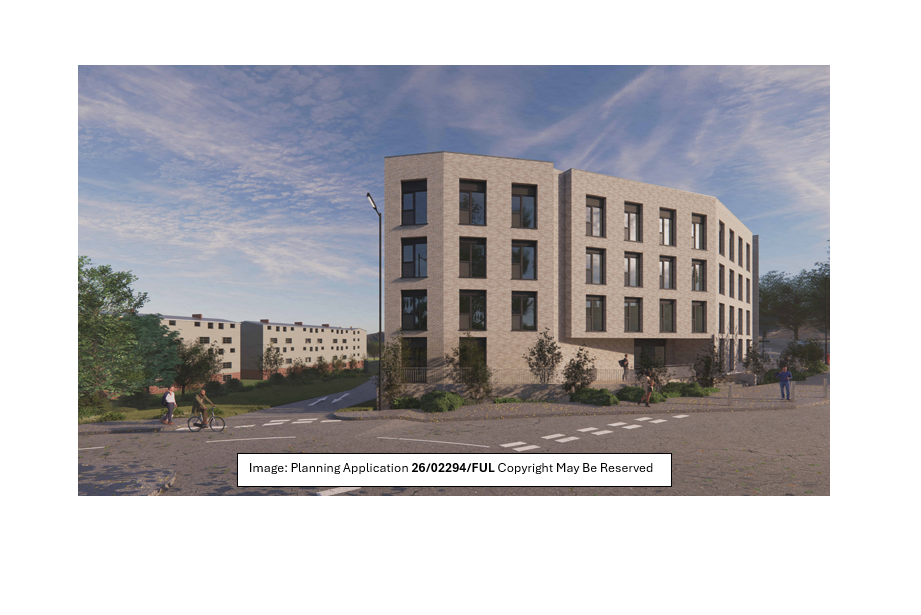
The Cockburn Association supports the principle of redeveloping this long-vacant site and recognises the potential for the proposal to repair the Robertson Avenue streetscape.  However, the Association objects to the proposal in its current form.

The architectural elevation does not adequately align with the roofline and horizontal string courses of the adjoining traditional tenement, resulting in an unsatisfactory relationship with the established streetscape. A revised design aligning façade elements with neighbouring architectural datum lines would significantly improve contextual integration.

Clarification is also required regarding:

  • the extent of ground-floor activation and the development’s contribution to the street environment;
  • the building’s capacity to be adapted to mainstream residential use in future.

The Association also reiterates its concern regarding the cumulative concentration of PBSA within the Gorgie and Dalry corridor. While modest in scale individually, such developments may collectively undermine balanced communities if not carefully managed.

A revised design addressing the issues identified above would significantly improve the proposal’s relationship with its context and its contribution to the wider neighbourhood.

Rose Street Theatre (former Charlotte Chapel)

Posted on:

Adaptive reuse supported, subject to strong conservation safeguards

Adaptive reuse supported, subject to strong conservation safeguards

Cockburn Response

The Cockburn Association welcomes the opportunity to comment on the revised proposal for the conversion of the former Rose Theatre to hotel use.

We previously raised substantial concerns regarding the extent of internal subdivision and loss of significant historic fabric. It is therefore important to acknowledge that the current submission demonstrates a constructive response. The retention of the principal sanctuary space and the decision to preserve the historic pulpit are positive and reflect a clearer appreciation of the building’s architectural and cultural significance.

The Association supports the principle of bringing a long vacant listed building back into sustainable use. Securing a viable future for heritage assets is essential to their long-term conservation and to the vitality of the city centre.

However, heritage impact remains the central consideration. The special interest of the building lies not only in individual features but in the coherence of its interior volume and its layered history as chapel and theatre. Further assurance is required that hotel adaptation, services installation and subdivision will not undermine that integrity. A rigorous and clearly articulated conservation methodology should underpin any consent, with particular emphasis on reversibility and minimal intervention.

The Association also notes the cumulative reduction of cultural venues within the city centre. While market realities are acknowledged, we encourage exploration of opportunities to retain some element of public or cultural use within the scheme to maintain continuity with the building’s recent history.

Given the improvements made, the Cockburn Association does not object in principle to the adaptive reuse of the building. Our position is conditional. We urge the planning authority to secure robust conservation safeguards and to ensure that the final design exemplifies best practice within he New Town Conservation Area and World Heritage Site.

Subject to those safeguards, the revised proposal has the potential to represent a more balanced and conservation-led outcome than the previously refused scheme.

Photo: Christopher Anderson / Wikimedia Commons, licensed under Creative Commons Attribution-ShareAlike.

Cameron Toll Consulatation

POSTED ON

Cameron Toll vision needs coordinated masterplanning and civic leadership.

Cameron Toll vision needs coordinated masterplanning and civic leadership.

Support the Cockburn

Donate
Join Us

Cameron Toll Consulatation

Posted on:

Cameron Toll vision needs coordinated masterplanning and civic leadership.

Cameron Toll vision needs coordinated masterplanning and civic leadership.

Cockburn Response

The Cockburn Association welcomes the opportunity to comment on the emerging Cameron Toll masterplan and planning applications at this pre-application stage.

We recognise the need to review the long-term future of this inward-facing retail centre and acknowledge the potential for redevelopment to improve permeability, introduce new homes and strengthen the civic presence of the centre within south Edinburgh. The ambition to enhance the public realm, improve connections with surrounding neighbourhoods and support more sustainable patterns of movement is also noted.

However, Cameron Toll is a site of such scale and strategic importance that its future cannot be left to the cumulative effect of individual development proposals or market-led change alone. Proposals now being discussed suggest the introduction of several hundred new homes, alongside retail, leisure and transport infrastructure. In effect, this would amount to the creation of a substantial new neighbourhood centre rather than simply the refurbishment of an existing shopping complex.

For that reason, the transformation of the site must be guided through a comprehensive masterplanning process led and facilitated by the City of Edinburgh Council. A clear civic framework is essential to ensure that redevelopment delivers coherent urban form, integrates properly with surrounding communities and contributes positively to the wider objectives of City Plan 2030 and National Planning Framework 4.

The stated ambition to create a “20-minute neighbourhood” is welcome in principle. Achieving this in practice, however, requires careful coordination of housing mix, transport infrastructure, local services, public realm and green space. Such outcomes cannot be guaranteed through piecemeal development. They require strategic oversight and long-term planning.

The site also has wider city-scale implications. Its location at a key southern gateway to Edinburgh, together with potential connections to future sustainable transport infrastructure and the opportunity to improve the Braid Burn corridor and links to Inch Park, reinforces the importance of an integrated approach.

Any support for redevelopment must therefore be conditional on the detail and evidence contained within the forthcoming planning applications. In particular, we will expect to see:

  • Clear justification for proposed building heights and massing, supported by robust townscape and visual assessment
  • A comprehensive and evidence-based transport and parking strategy that demonstrates no adverse impact on surrounding residential streets
  • High-quality public realm design with secure long-term management arrangements
  • Measurable commitments to whole-life carbon reduction, embodied carbon assessment and climate resilience
  • Demonstrable alignment with City Plan 2030 and National Planning Framework 4

Cameron Toll presents a rare opportunity to reshape a significant suburban site and create a more outward-looking, sustainable neighbourhood centre. Realising that opportunity will require strong civic leadership, careful coordination and a clear commitment to placemaking. The test will be whether the detailed proposals deliver a genuinely integrated urban quarter rather than simply an intensification of the existing retail format.

The Cockburn Association looks forward to continued engagement with the Council and the applicant team as the proposals develop.


Photo: Richard Webb / Geograph, licensed under Creative Commons Attribution-ShareAlike 2.0.

Frederick Douglass plaque

Posted on: February 10, 2026

Approve plaque commemorating Frederick Douglass’s historic abolitionist speech in Edinburgh

Approve plaque commemorating Frederick Douglass’s historic abolitionist speech in Edinburgh

Cockburn Response

The Cockburn Association supports this modest and appropriate proposal to install a bronze commemorative plaque to Frederick Douglass at 29A Waterloo Place. The application represents a valuable addition to Edinburgh’s historic environment and offers an important opportunity to recognise the city’s connections to global movements for justice and human rights.

Frederick Douglass (1818–1895) was one of the most significant abolitionist voices of the nineteenth century. Having escaped from slavery in the United States, he became an internationally respected campaigner, writer and speaker. Douglass visited Scotland during his tour of Britain and Ireland in 1846, and spent time in Edinburgh addressing public meetings on the injustice of slavery. His presence in the city forms part of a wider history of Scottish engagement with transatlantic abolitionism, as well as Douglass’s own intellectual admiration for figures such as Robert Burns and Walter Scott.

The proposed plaque is small in scale, sensitively designed, and directly related to the historical significance of the building where Douglass spoke. Such commemorative markers contribute to public understanding of Edinburgh’s layered past and support a more inclusive interpretation of the city’s heritage. The installation would enhance the cultural and educational value of Waterloo Place without adverse impact on the character of the conservation area.

In planning terms, this is a well judged intervention that strengthens place identity, promotes historical awareness, and aligns with wider objectives around civic memory, equality, and the respectful enrichment of the public realm.

For these reasons, the Cockburn Association encourages the Council to support the application, and recommends that the final wording of the plaque inscription be reviewed and verified in consultation with appropriate academic authorities to ensure historical accuracy.

Image: Frederick Douglass, c.1855–1879, public domain photograph.

Argyle House – PAN Consultation

Posted on: February 6, 2026

Proceed cautiously; respect listing process before irreversible decisions.

Proceed cautiously; respect listing process before irreversible decisions.

Cockburn Response

The Cockburn Association welcomes the opportunity to comment on the emerging redevelopment proposals for Argyle House, Castle Terrace. The building occupies a highly prominent and sensitive position at the western edge of the Old Town, close to the setting of Edinburgh Castle and within the wider landscape of the UNESCO World Heritage Site. Any significant change on this site must therefore be approached with exceptional care, given the importance of the area to Edinburgh’s historic character and international identity.

The Association notes that an application has now been accepted by Historic Environment Scotland for the listing of Argyle House, and that HES will carry out a priority assessment. This development is significant. Whatever views are held about the building’s architectural qualities, the submission of a listing application confirms that Argyle House is now being considered within Scotland’s formal framework of heritage evaluation. In such circumstances, it is essential that no irreversible decisions are taken until the national designation process has been allowed to run its course.

Argyle House has become one of Edinburgh’s most contested post-war structures. For some it represents an unwelcome and austere interruption in the Castle Terrace townscape, and recent coverage has highlighted the strength of public opinion on both sides of the debate. Local residents remain divided, with the building described variously as an eyesore and as a landmark of its time. At the same moment, there is increasing recognition across Scotland that buildings of the Brutalist era form part of our architectural story, and that their future cannot be determined solely through popularity or aesthetic discomfort. The current listing bid itself reflects this wider cultural shift, reported as a serious attempt to protect an important example of Scottish Modernist heritage from premature loss.

In considering this site, the Cockburn Association also wishes to highlight the wider responsibilities now attached to redevelopment decisions in a climate emergency. Demolition and replacement of large concrete structures carries a substantial embodied carbon cost. National planning policy increasingly expects that adaptation and reuse are properly explored as part of sustainable development practice. The Association therefore considers that any future planning process must be informed by a clear and transparent appraisal of options, including retrofit potential, whole-life carbon assessment, and the feasibility of partial retention or structural reuse, alongside any redevelopment ambitions.

It is equally important to recognise that Argyle House is not an empty structure. The building continues to support active economic and civic uses, including workspace communities that contribute to the life of the city centre. Consideration of its future should therefore take account not only of form and setting, but also of the social and functional role that existing buildings can sustain, particularly at a time when affordable and adaptable urban space is under increasing pressure.

The Association does not seek, at this stage, to pre-empt the outcome of Historic Environment Scotland’s assessment, nor to reduce the complexity of this case to a binary choice between demolition and conservation. Instead, Argyle House should be understood as a test of Edinburgh’s ability to engage thoughtfully with its twentieth-century architectural inheritance, while also meeting present-day expectations around sustainability, urban regeneration, and cultural stewardship.

In conclusion, the Cockburn Association urges the planning authority to proceed cautiously, and to ensure that the listing process is fully respected before any decision is reached that would foreclose future options. The Association would welcome continued engagement as proposals develop, and emphasises that the significance of this site demands the highest standards of evidence, design scrutiny, and long-term thinking.


Consultation website: https://www.argylehouseconsultation.com/

Photograph: Argyle House, Edinburgh, by Mike Shaw, licensed under CC BY-SA 4.0, via Wikimedia Commons.
Original file: https://commons.wikimedia.org/wiki/File:Argyle_House,_Edinburgh_01.jpg