Heritage as Infrastructure
POSTED ON August 14, 2026 BY James Garry
Historic buildings are civic infrastructure, repaying thoughtful investment many times over.
That has been the Cockburn Association’s working principle since 1875: not that Edinburgh should be preserved unchanged, nor that development should be resisted for its own sake, but that change should respect the qualities which make this city distinctive, while ensuring its historic environment continues to serve contemporary needs. Two things happened this month that show why that principle still matters.
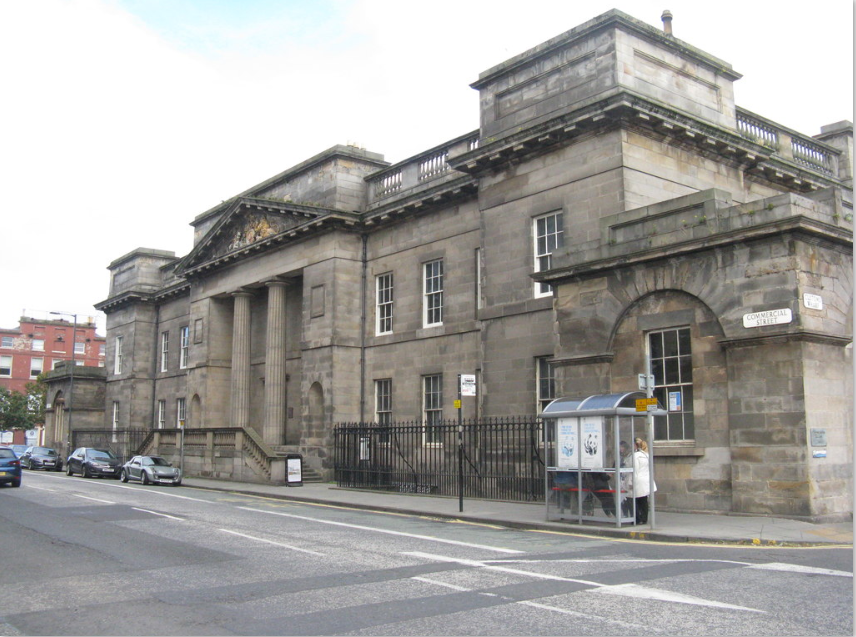
The first is a set of funding recommendations now going to committee. Three buildings left off the original schedule of Visitor Levy projects — Leith Custom House, the Tron Kirk and the Portobello kilns — are recommended for support: £300,000 in match-funding to advance plans for a museum and community space at the Custom House, an A-listed building and the oldest of its kind in Scotland; £200,000 towards restoring the Tron Kirk, combined with the neighbouring Hunter Square public realm scheme; and £724,000 to rebuild the 1906 pottery kiln at Portobello. That these projects needed sustained campaigning to secure funding they should have had from the outset is worth remembering. Good outcomes are not guaranteed by good cases alone.
When the Scottish Historic Buildings Trust first raised the alarm in February, all three had been left off the initial list of allocations despite what its director called an “urgent need” to save two irreplaceable, council-owned buildings. The Tron Kirk alone supports some 80 jobs through the Scottish Design Exchange, the community of makers and craftspeople who currently work from it. That the case took six months and a public campaign to be recognised says something about how heritage funding decisions get made, as much as it says anything about the buildings themselves.
The second is the fire on Princes Street a month earlier. The blaze at the former Debenhams building on 9 July has left the street closed between Frederick Street and South Charlotte Street ever since. Trams have not run through to Leith and Newhaven since the fire, operating only between the Airport and Shandwick Place, and businesses have been disrupted through the Festival. Whatever the cause turns out to be, the consequences illustrate something the Association has long argued: the health of Edinburgh’s historic fabric has effects that extend well beyond the buildings themselves. The Tron Kirk offers a quieter version of the same lesson. Added to the Buildings at Risk Register in 2003, it required costly emergency repairs in 2024 after falling masonry endangered the public, and surveys in 2023 and 2025 pointed to the same conclusion a report to committee later stated outright: that the building’s reactive approach was “no longer sustainable.” Reactive spending of that kind is rarely cheaper than planned maintenance. It is usually the opposite.
The Visitor Levy gives the city a means to be proactive rather than reactive. It is a modest instrument by design — a 5% charge on the accommodation-only cost of overnight stays, capped at the first five nights, expected to raise in the region of £100 million over its first three years — but Edinburgh draws millions of visitors each year in large part because of its historic environment, and reinvesting a share of that income in the fabric that makes those visits worthwhile is a reasonable exchange.
Edinburgh already provides numerous examples of historic buildings that repay investment many times over. The Tron Kirk now supports around eighty jobs through the Scottish Design Exchange. Dovecot Studios has transformed a former Victorian baths into an internationally recognised centre for tapestry, exhibitions and education, sustaining highly skilled craft and attracting visitors throughout the year. Summerhall has shown how the imaginative reuse of a historic building can create a year-round home for artists, creative businesses, festivals and community organisations. This year’s opening of the refurbished Fringe Central provides the latest example: a listed former school adapted as an accessible, low-carbon headquarters for the Edinburgh Festival Fringe Society and a permanent resource for artists and local communities. None of these buildings has been preserved as a monument alone. Each continues to generate economic, social and cultural value because it has been thoughtfully adapted for contemporary use.
The levy’s first tranche does already reach beyond the immediate city centre: £2 million for Cramond foreshore and £2.5 million for Portobello Promenade, alongside £3 million for Hunter Square in the Old Town. That spread is encouraging. But the case for the levy will be harder to make if future spending concentrates in the areas that already draw the most visitors and attention, and the pattern so far does not settle the question either way. Corstorphine, Portobello and Cramond carry heritage needs of their own, and the traditional tenements, closes, boundary walls, churchyards and neighbourhood streets that residents pass every day do as much to define Edinburgh’s character as any single monument — even though they attract none of the headlines.
The same applies to the public realm around these buildings: setted streets, pavements, street trees and civic spaces all shape how the city is experienced day to day, and conservation and placemaking succeed or fail together, not separately.
No single fund will resolve every pressure on Edinburgh — housing, transport, climate resilience and public services all compete for attention, and the levy is not a substitute for the public funding the historic environment deserves in its own right. But if it helps embed a culture where maintenance is valued as highly as restoration, where historic buildings are recognised as productive civic assets rather than financial liabilities, and where investment reaches beyond the city centre, it will have done something worth doing.
Edinburgh’s historic environment is usually described as an inheritance. It is better understood as infrastructure: something that requires regular care and long-term planning if it is to keep working, not something that simply survives on its own. That has been the Cockburn Association’s message for 150 years, and July and August have both, in their different ways, shown why it still holds.
Sources and further reading
- Ian Swanson, “Three more historic Edinburgh buildings will get restoration funding from new tourist tax,” The Scotsman, 11 August 2026. Read the article in The Scotsman
- The Cockburn Association, What Edinburgh’s New Tourist Tax Means for the City, 19 February 2026. Read the Cockburn Association article
- Historic Environment Scotland, Our Past, Our Future: The Strategy for Scotland’s Historic Environment (2023). This is the current strategy and supersedes the 2014 Our Place in Time. Read Our Past, Our Future
If you specifically want to retain the older strategy: Our Place in Time (2014) - UNESCO World Heritage Centre, Old and New Towns of Edinburgh. UNESCO World Heritage Site entry
- Scottish Government, Local Visitor Levy, including information on the Visitor Levy (Scotland) Act 2024 and implementation guidance. Scottish Government visitor levy guidance
The legislation itself is available here: Visitor Levy (Scotland) Act 2024 - City of Edinburgh Council, Princes Street updates, covering the July 2026 fire at the former Debenhams building, safety works, closures and recovery arrangements. Princes Street fire updates The Council also has a useful Princes Street fire FAQ, which links onward to the Scottish Fire and Rescue Service investigation.
- Edinburgh Festival Fringe Society, Support the New Fringe Central, on the refurbishment and 2026 opening of the permanent Fringe Central at Infirmary Street. Fringe Central information
- The Cockburn Association, Campaigning for Edinburgh: The Cockburn Association 1875–2049 (2025), published to mark the Association’s 150th anniversary and exploring both its history of civic stewardship and Edinburgh’s future. (The Cockburn Association) View/purchase Campaigning for Edinburgh (The Cockburn Association)
Photo: Custom House, Leith. Photograph: M J Richardson / Geograph, licensed under CC BY-SA 2.0.