Opening the Doors Wider: Access and Doors Open Days in Edinburgh
POSTED ON September 24, 2026 BY James Garry
Opening Edinburgh’s historic buildings, spaces and places to more people, in more ways
Many of Edinburgh’s historic buildings were not designed with every visitor in mind. This weekend’s Doors Open Days shows how much can be done to open them more widely, and why clear, honest information matters as much as ramps and lifts.
Last week we looked back over 35 years of Doors Open Days in Edinburgh, from the 61 buildings that first welcomed the public in 1991 to the programme that now stretches across the city and into East Lothian. This weekend, on Saturday 26 and Sunday 27 September, the 2026 programme gets under way, with over 120 venues taking part. It is set to be the Association’s most accessible Doors Open Days yet, with, in the words of our Director Rowan Brown, “something for all ages, interests, and abilities.” Before you plan your route, it is worth considering a question that sits at the heart of the idea of opening doors: open to whom?
A city built on steps
Edinburgh is not an easy city to get around, and its buildings reflect that. The Old Town climbs through closes and turnpike stairs; the New Town raises its front doors above basement areas on flights of stone steps; churches place their best views in galleries, and towers are reached by narrow spiral stairs. These buildings were made for their own time, long before the expectations and standards of inclusive access that we rightly apply today.
Adapting them is not straightforward. A ramp or a lift can harm the very fabric that makes a building worth visiting, and alterations to listed buildings rightly require careful thought and consent. Costs fall heavily on the congregations, trusts and volunteer groups who look after many of our venues. Some places will always ask something of the people who enter them: a wartime bunker set into an old quarry, or a close uncovered beneath the Old Town, cannot be made step-free without ceasing to be what they are.
Access also means more than steps. It includes hearing loops and sign language, clear information in advance, quieter spaces, and the chance to take part for those who cannot travel at all.
Conservation should not mean shutting people out. Where change can be accommodated without harming what makes a building significant, improving access should be part of keeping historic places useful, understood and valued. Several buildings in this year’s programme show what that looks like in practice.
Adaptation done well
Some of this weekend’s venues are buildings that have been given new lives and made more welcoming in the process. Dovecot Studios occupies the former Infirmary Street Baths of 1885, saved from possible demolition, with its tapestry studio now working in the old swimming pool. Edinburgh Printmakers has turned the former Castle Silk Mills in Fountainbridge, later home to the North British Rubber Company, into a centre for printmaking and the visual arts. Adam Smith’s Panmure House, built in 1691, has been rescued and restored by Heriot-Watt University. All three are listed in the programme with disabled access and accessible WCs, and Dovecot and Printmakers also offer hearing loops.
Norton Park on Albion Road is perhaps the fullest example. A former school and two repurposed churches now house 29 charities and social enterprises, and the venue describes its guided tours, running on the hour from 10am on Saturday, as fully accessible. The architect behind the conversion will speak at 11am and 1pm about the building’s history and environmental credentials, and there will be screenings of The Singing Street, the 1950s film of local children’s games and songs made by a Norton Park teacher. No booking is needed.
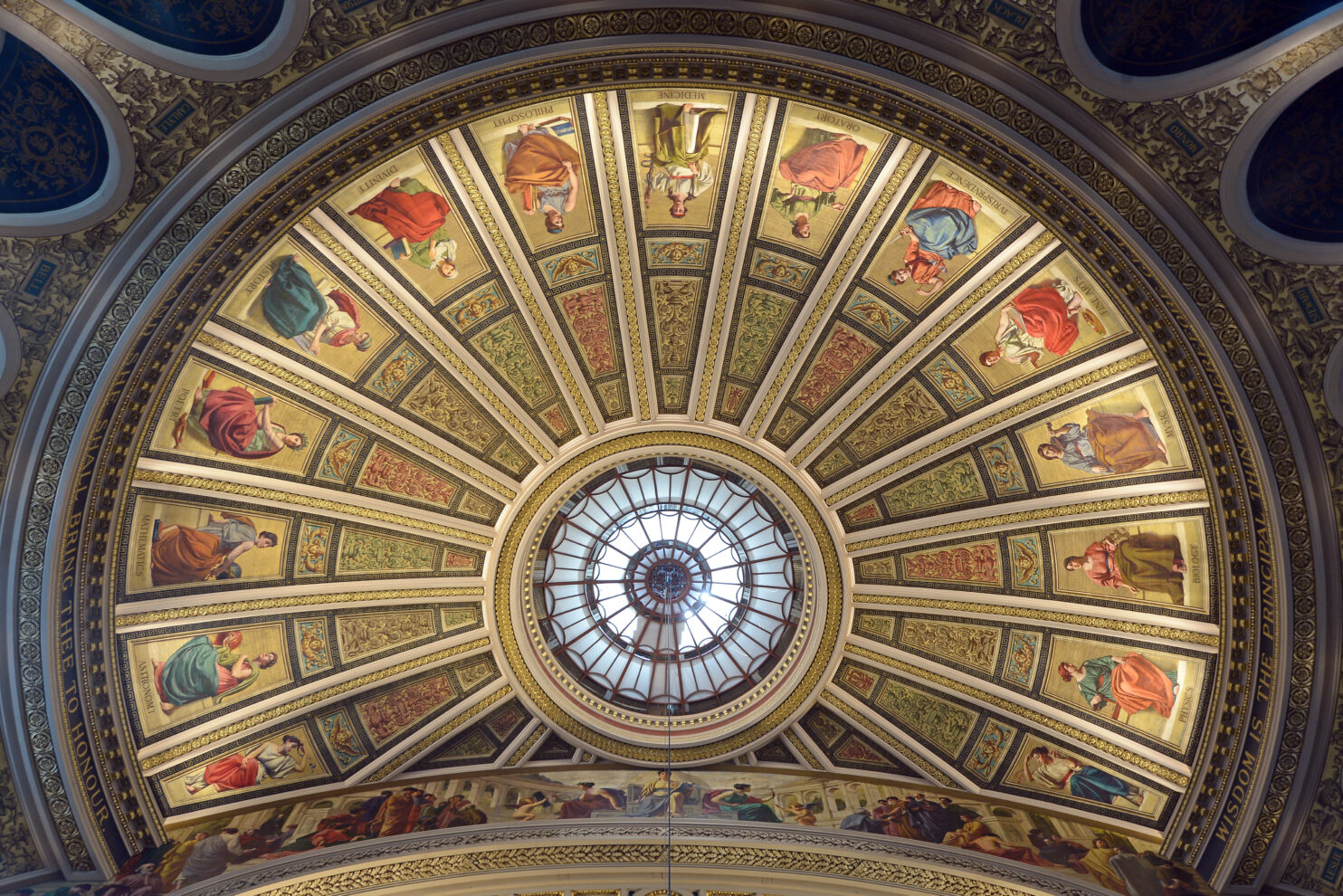
Access for deaf visitors is represented across the programme too. Deaf Action, which supports British Sign Language users and people who are deafened, deafblind or hard of hearing, opens its doors across both days. At McEwan Hall, whose refurbishment restored its painted dome while adding accessible facilities, the University of Edinburgh’s British Sign Language team will welcome deaf visitors on Sunday from 10am to 4pm. Hearing loops are available at a number of participating churches and other venues.
Some buildings are still partway through the process. granton:hub, based in Madelvic House, built in 1898 as the head office of Scotland’s first purpose-built electric car factory, has recently been awarded significant funding to improve its accessibility and refurbish the building. This goes to the heart of this year’s national theme, Heritage at Risk: Revive, Resist, Reimagine. Historic buildings survive by remaining in use, and a building that more people can use is one with a stronger claim on the future. Improving access is part of good stewardship.
Widening the invitation
Access is social as well as physical. Some people feel that heritage is not for them, whatever the state of the steps. This year the Association has funded four walking tours with Invisible Cities, a social enterprise that trains people with experience of homelessness to become tour guides. The guides design and deliver the routes themselves, offering a view of the city that few guidebooks provide. With Impact Arts, we are also sending a Doors Open Days invitation to every primary school child in Edinburgh, in the hope of beginning a lifelong relationship with the city’s heritage.
Where access remains difficult
Not every building can be made fully accessible, and here the quality of information matters a great deal. National Records of Scotland shows how it can be done well. Its listing states clearly that the tour route through Robert Adam’s General Register House is not suitable for wheelchair users or those with limited mobility. It points visitors to the accessible entrance through the Archivists’ Garden and asks those booking tours to mention any access requirements. Alongside the Saturday opening, NRS is publishing a digital animation of General Register House, a video tour of New Register House and a 3D scan of the Archivists’ Garden on its Open Book blog, so that people who cannot visit in person can still explore.
That clarity matters across the programme. Every listing on the Doors Open Days website carries symbols indicating disabled access, limited access, accessible WCs and hearing loops, and many include further access information. A venue marked “Not Accessible” has not failed; it has given you the information you need to plan your weekend with confidence. The Scottish Civic Trust also provides venues with an Inclusive Events Toolkit to help organisers think about access before the doors open.
Taking part from home
Digital access is not a substitute for improving physical access where that can reasonably be achieved. It can, however, open Edinburgh’s heritage to people who might otherwise be excluded altogether, and this year’s festival builds on its digital offer so that more people can take part without leaving home. The programme’s search includes a filter for digital events.
The Association has partnered with Jill Harrison of the Open University, who leads the Trinity Network, to curate an online exhibition on Trinity Apse. One of Edinburgh’s finest medieval structures, the apse is all that remains of the church founded in the 1460s by Mary of Guelders, Queen of Scotland. It is rarely open to the public, and the exhibition allows anyone, anywhere, to discover it. In keeping with this year’s theme, it revives the story of the apse and its founder, resists their slide into obscurity, and reimagines what the building’s future might hold. It is a reminder that some heritage becomes accessible first through its story, long before its doors can be opened more widely.
Young people from Impact Arts spent the summer visiting eight Doors Open Days venues and have produced a zine that can be read online, along with a colourable heritage map for children, available at venues over the weekend. Their artwork is on show at St Michael’s Parish Church, Slateford, on Saturday from 10am to 4pm and Sunday from 10am to 3pm.
Plan your weekend
Check the access symbols and additional information on each venue’s page. Where booking is required, mention any access needs when you book, and if in doubt, contact the venue in advance. If getting out isn’t possible, the digital events filter will show you what can be explored from home.
Doors Open Days began from a simple idea: that places are better understood once people can experience them for themselves. Thirty-five years on, the challenge is to make that opportunity available to as many people as possible. Edinburgh’s historic buildings will never all be easy places to enter, but thoughtful adaptation, good information and imaginative alternatives can make the city’s heritage considerably more open than it once was.
This weekend is a chance to experience that heritage for yourself.
Edinburgh and East Lothian Doors Open Days takes place on Saturday 26 and Sunday 27 September 2026. The event is free, although advance booking is required for some venues. Explore the full programme, including access information for every venue, and start planning your weekend.
Image: McEwan Hall (c) Neil Hanna – ceiling.jpg