Leith Theatre Spring Heritage Tour
Thursday, Apr 16
Behind-the-scenes tour of historic Thomas Morton Hall venue
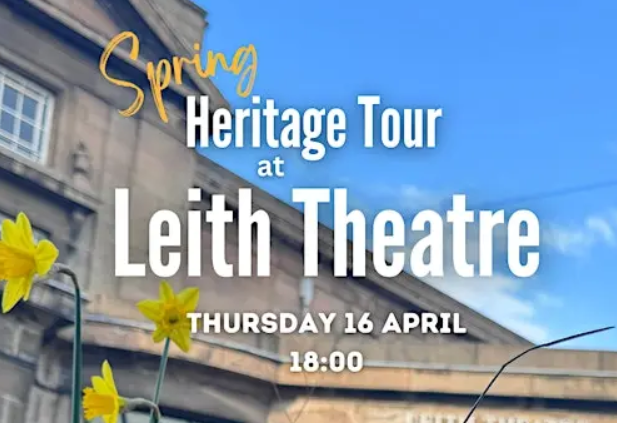
Behind-the-scenes tour of historic Thomas Morton Hall venue
Exploring intangible heritage, archives, and community culture in Scotland
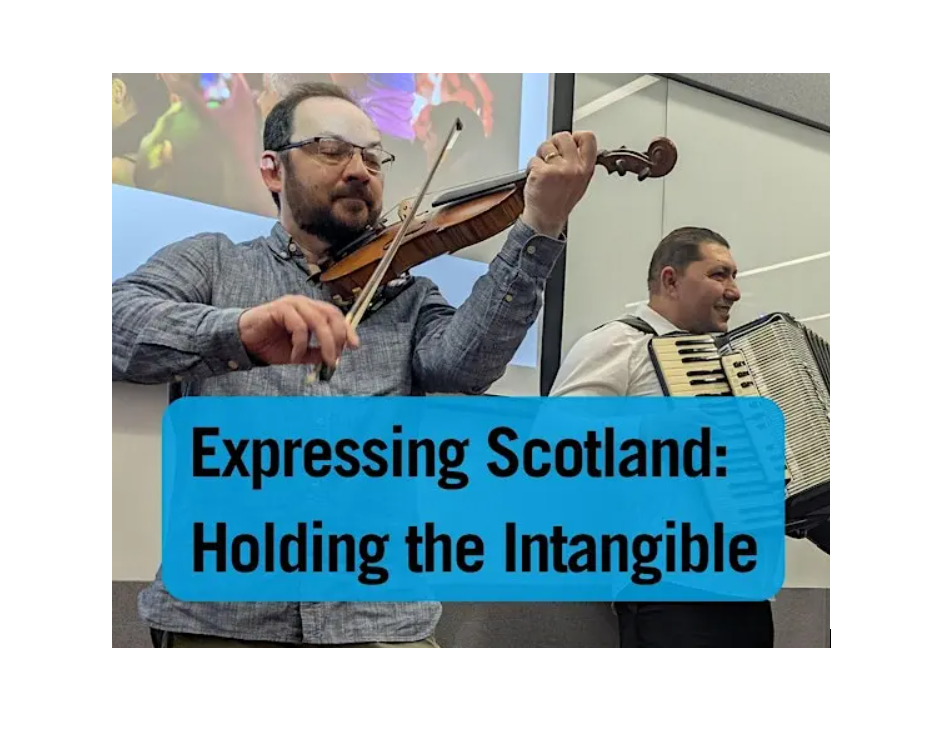
Heritage, culture and placemaking shaping resilient Scottish urban futures
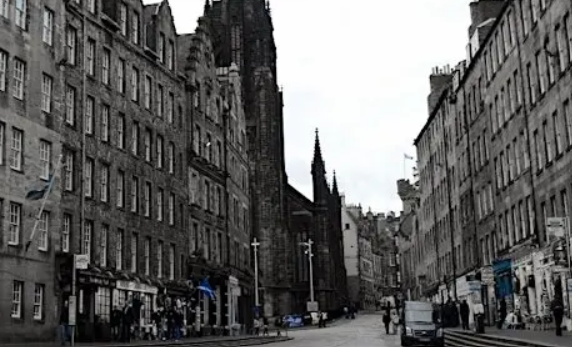
Opposes apart-hotel; risks interiors, heritage integrity, and mixed-use balance.
Opposes apart-hotel; risks interiors, heritage integrity, and mixed-use balance.
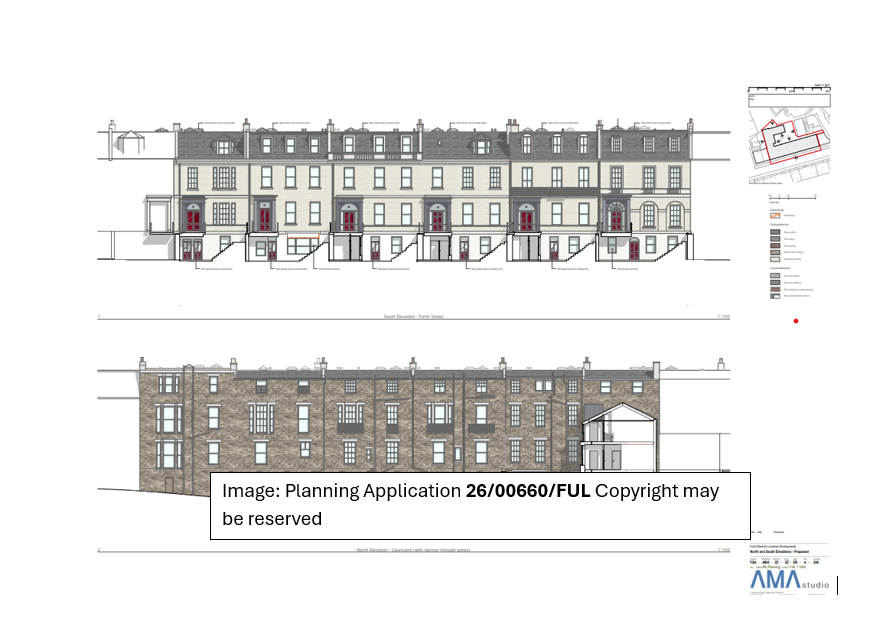
The Cockburn Association objects to the proposed conversion of 16–26 Forth Street from office use to a large apart-hotel.
While the continued repair and reuse of historic buildings is welcome in principle, the scale and intensity of the proposed development raise significant concerns. The level of internal subdivision required to create approximately ninety visitor accommodation units risks undermining the spatial character and architectural integrity of the listed Georgian interiors.
Concerns also arise regarding the design and scale of the proposed rear extension within the courtyard environment, which must remain clearly subordinate to the historic terrace.
More broadly, the proposal contributes to an increasing pattern of converting buildings within the city centre to visitor accommodation. While tourism is an important part of Edinburgh’s economy, the cumulative loss of employment and mixed-use functions risks undermining the balanced character of the New Town.
For these reasons, the Cockburn Association objects to the proposal and encourages the planning authority to carefully consider both the heritage impacts and the cumulative effects of visitor accommodation within this historic area.
Design misalignment undermines streetscape; redevelopment principle supported
Design misalignment undermines streetscape; redevelopment principle supported
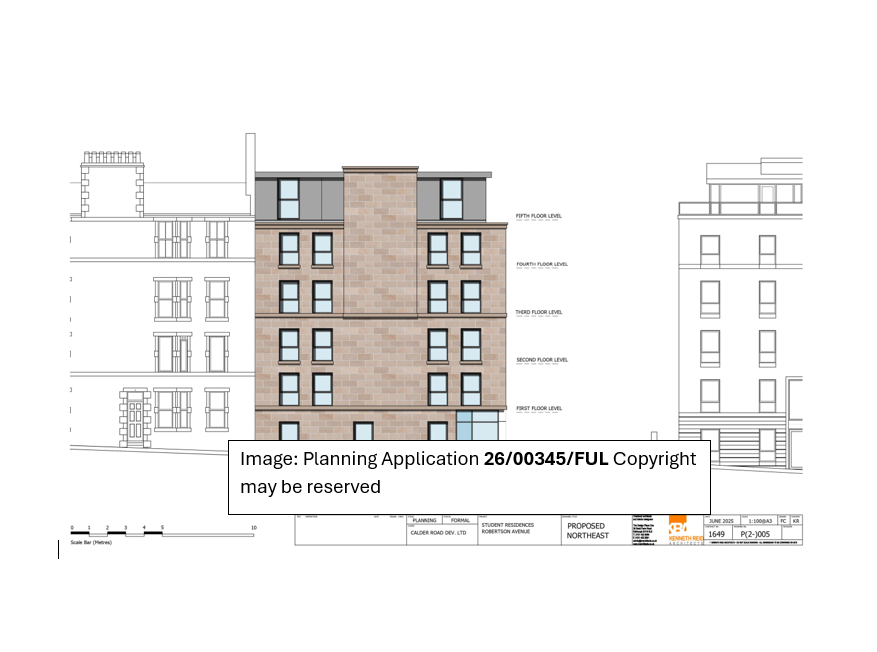
The Cockburn Association supports the principle of redeveloping this long-vacant site and recognises the potential for the proposal to repair the Robertson Avenue streetscape. However, the Association objects to the proposal in its current form.
The architectural elevation does not adequately align with the roofline and horizontal string courses of the adjoining traditional tenement, resulting in an unsatisfactory relationship with the established streetscape. A revised design aligning façade elements with neighbouring architectural datum lines would significantly improve contextual integration.
Clarification is also required regarding:
The Association also reiterates its concern regarding the cumulative concentration of PBSA within the Gorgie and Dalry corridor. While modest in scale individually, such developments may collectively undermine balanced communities if not carefully managed.
A revised design addressing the issues identified above would significantly improve the proposal’s relationship with its context and its contribution to the wider neighbourhood.
Adaptive reuse supported, subject to strong conservation safeguards
Adaptive reuse supported, subject to strong conservation safeguards
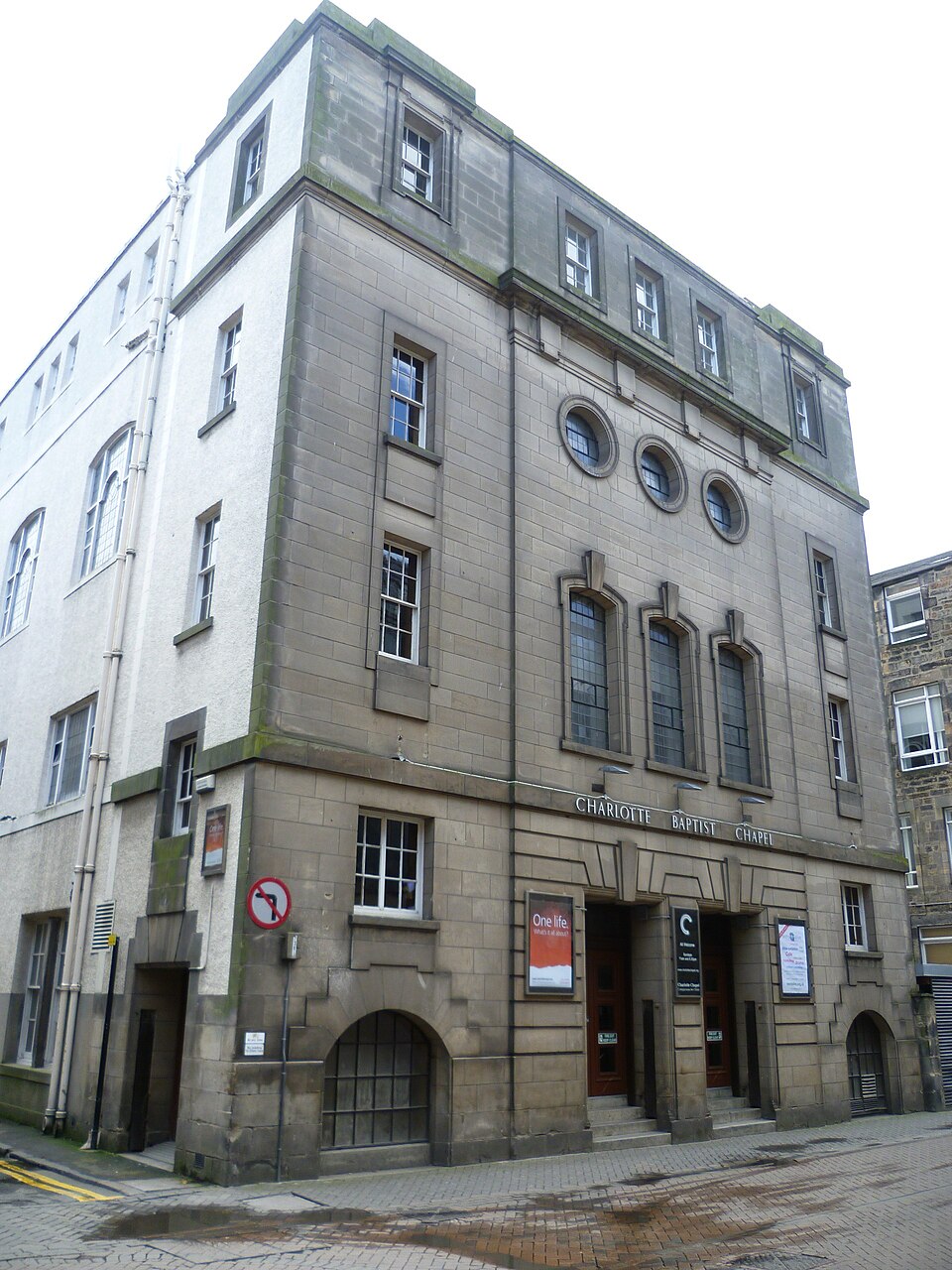
The Cockburn Association welcomes the opportunity to comment on the revised proposal for the conversion of the former Rose Theatre to hotel use.
We previously raised substantial concerns regarding the extent of internal subdivision and loss of significant historic fabric. It is therefore important to acknowledge that the current submission demonstrates a constructive response. The retention of the principal sanctuary space and the decision to preserve the historic pulpit are positive and reflect a clearer appreciation of the building’s architectural and cultural significance.
The Association supports the principle of bringing a long vacant listed building back into sustainable use. Securing a viable future for heritage assets is essential to their long-term conservation and to the vitality of the city centre.
However, heritage impact remains the central consideration. The special interest of the building lies not only in individual features but in the coherence of its interior volume and its layered history as chapel and theatre. Further assurance is required that hotel adaptation, services installation and subdivision will not undermine that integrity. A rigorous and clearly articulated conservation methodology should underpin any consent, with particular emphasis on reversibility and minimal intervention.
The Association also notes the cumulative reduction of cultural venues within the city centre. While market realities are acknowledged, we encourage exploration of opportunities to retain some element of public or cultural use within the scheme to maintain continuity with the building’s recent history.
Given the improvements made, the Cockburn Association does not object in principle to the adaptive reuse of the building. Our position is conditional. We urge the planning authority to secure robust conservation safeguards and to ensure that the final design exemplifies best practice within he New Town Conservation Area and World Heritage Site.
Subject to those safeguards, the revised proposal has the potential to represent a more balanced and conservation-led outcome than the previously refused scheme.
Photo: Christopher Anderson / Wikimedia Commons, licensed under Creative Commons Attribution-ShareAlike.
Cameron Toll vision needs coordinated masterplanning and civic leadership.
Cameron Toll vision needs coordinated masterplanning and civic leadership.
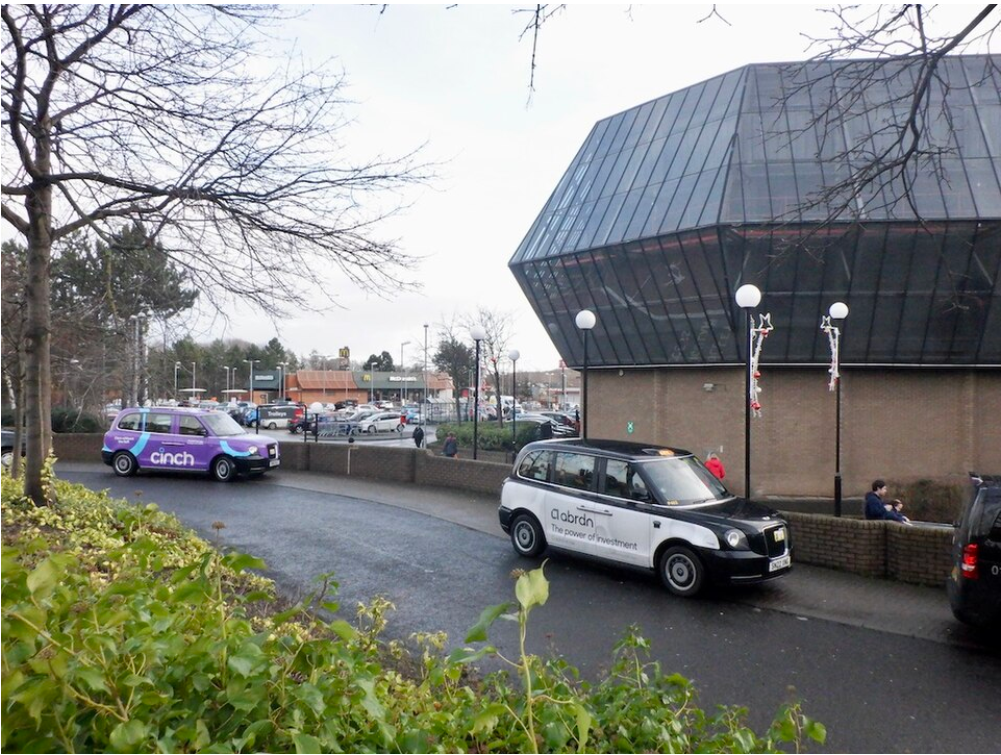
The Cockburn Association welcomes the opportunity to comment on the emerging Cameron Toll masterplan and planning applications at this pre-application stage.
We recognise the need to review the long-term future of this inward-facing retail centre and acknowledge the potential for redevelopment to improve permeability, introduce new homes and strengthen the civic presence of the centre within south Edinburgh. The ambition to enhance the public realm, improve connections with surrounding neighbourhoods and support more sustainable patterns of movement is also noted.
However, Cameron Toll is a site of such scale and strategic importance that its future cannot be left to the cumulative effect of individual development proposals or market-led change alone. Proposals now being discussed suggest the introduction of several hundred new homes, alongside retail, leisure and transport infrastructure. In effect, this would amount to the creation of a substantial new neighbourhood centre rather than simply the refurbishment of an existing shopping complex.
For that reason, the transformation of the site must be guided through a comprehensive masterplanning process led and facilitated by the City of Edinburgh Council. A clear civic framework is essential to ensure that redevelopment delivers coherent urban form, integrates properly with surrounding communities and contributes positively to the wider objectives of City Plan 2030 and National Planning Framework 4.
The stated ambition to create a “20-minute neighbourhood” is welcome in principle. Achieving this in practice, however, requires careful coordination of housing mix, transport infrastructure, local services, public realm and green space. Such outcomes cannot be guaranteed through piecemeal development. They require strategic oversight and long-term planning.
The site also has wider city-scale implications. Its location at a key southern gateway to Edinburgh, together with potential connections to future sustainable transport infrastructure and the opportunity to improve the Braid Burn corridor and links to Inch Park, reinforces the importance of an integrated approach.
Any support for redevelopment must therefore be conditional on the detail and evidence contained within the forthcoming planning applications. In particular, we will expect to see:
Cameron Toll presents a rare opportunity to reshape a significant suburban site and create a more outward-looking, sustainable neighbourhood centre. Realising that opportunity will require strong civic leadership, careful coordination and a clear commitment to placemaking. The test will be whether the detailed proposals deliver a genuinely integrated urban quarter rather than simply an intensification of the existing retail format.
The Cockburn Association looks forward to continued engagement with the Council and the applicant team as the proposals develop.
Photo: Richard Webb / Geograph, licensed under Creative Commons Attribution-ShareAlike 2.0.
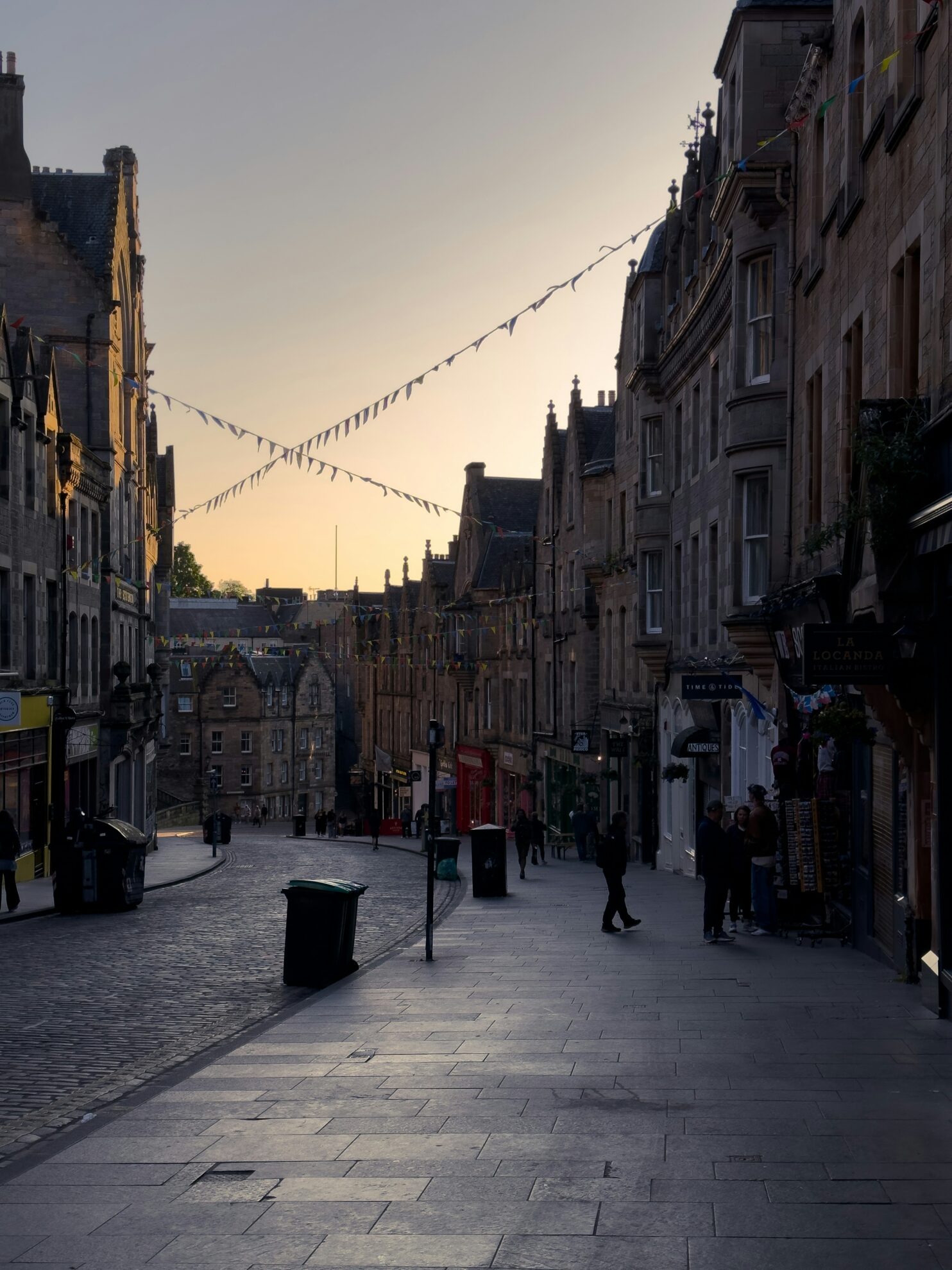
Hidden women’s histories shaping Edinburgh’s streets and stories