
Guest Blog: Challenging the Stigma of Place
POSTED ON October 6, 2026
By Steven Drew, Community Participation Officer, Poverty Alliance

By Steven Drew
Community Participation Officer, Poverty Alliance
Preface and Endnote by Lesley Martin, Chair, The Cockburn Association
How can appreciation of local heritage build community confidence and pride in place?
Preface
As the Doors Open Days weekends come to an end in Scotland, another important week that celebrates community and civic action is underway. Challenge Poverty Week runs from 5-11 October in 2026 and will include as its focus, the need to challenge the stigma associated with place. As a complement to the Cockburn Association’s collaboration with Invisible Cities, we are delighted to publish an article from Steven Drew, keen local historian and Community Participation Officer with the Poverty Alliance.
The article draws on Steven’s personal experience to paint a vivid picture of some of the lesser-known aspects of Niddrie: its strong sense of community and remarkable, though little-known historical sites and artefacts. The article contains a short film about Niddrie, commenting: “this area has so much to be proud of. Yet, it’s often held back by its persistent challenges and the stigma that comes with it.” There is even a connection with Billy Connolly – read on to find out what!
___________________________________________________________________
Growing up in Edinburgh, I developed a variety of views regarding parts of the city, including which were safe and which I should stay clear of. Though this is probably common wherever you’re raised, I’d only ever heard negative things of some areas, and so this belief was cemented inside for a long time. That perception stuck with me, right up until I was a 30-year-old man, when I received an offer to rent a flat in one such location – an area that will no doubt raise similar apprehensions for others living in the city; Niddrie.
Certainly, Niddrie and its close neighbour Craigmillar, have quite the reputation. For one, the Scottish Index of Multiple Deprivation places it inside the 10% most deprived areas in Scotland. Indeed, it is well known that the injustice of poverty is no stranger here. The area also appears in news headlines for all the wrong reasons, and these are often the stories that stick and define an area’s reputation. As I’ve come to learn through living here, though, these aren’t a fair representation of the area, nor the people who live here. Indeed, when I first moved here, the people were one of the first things that challenged my preconceptions. Up until this point, I’d lived in various areas around the city, such as Leith and Duddingston, but there is no doubt that Niddrie was the most welcoming of all, for me.
As time went on, I got to know several of my neighbours on a first name basis – something I’d never experienced before. Sure, it’s not like we’re hanging out together, but there is a sense of comradery and support unlike anything I’ve experienced in my previous homes. It’s like we’re all in the same boat and journeying together, supporting one another; there is a real sense of community. And this is something I personally benefit from quite regularly. For example, one of my neighbours is a mechanic, and has offered to help with my car several times, while another frequently puts my bins out for collection, often when I forget. And of course, I contribute back with my own skills whenever I can. This sense of community is undeniable, and something I even encountered when working with young people in the area, as one young man told me, “I know I can go to any random door here, and I’ll be able to get help”.
As time went on and I became more comfortable exploring the area, I found myself increasingly fond of it. I have a keen interest in history and ended up looking at the old 1940s aerial Ordnance Survey maps of the place I now called home, and I was shocked. I saw there was only one building, surrounded by grassland and fields; the great Niddrie House.
Also referred to as Niddrie Marischal House, this large building once stood alone on the lands that are now home to the streets, houses and flats of Niddrie. Despite being removed in the 1960s following a fire, its footprint is still visible in the street names of the area, such as the Niddrie House and Niddrie Marischal Road groups. Furthermore, to my utmost amazement, a part of the estate itself is still standing – the impressive Niddrie Mausoleum. When I discovered this, I could hardly believe it; how could I, someone with a keen interest in history and our city, not know there was a historic Mausoleum standing in the back gardens of this well-known housing estate? How is this not better known? Could it be that the area’s loud reputation overshadowed its unique history?
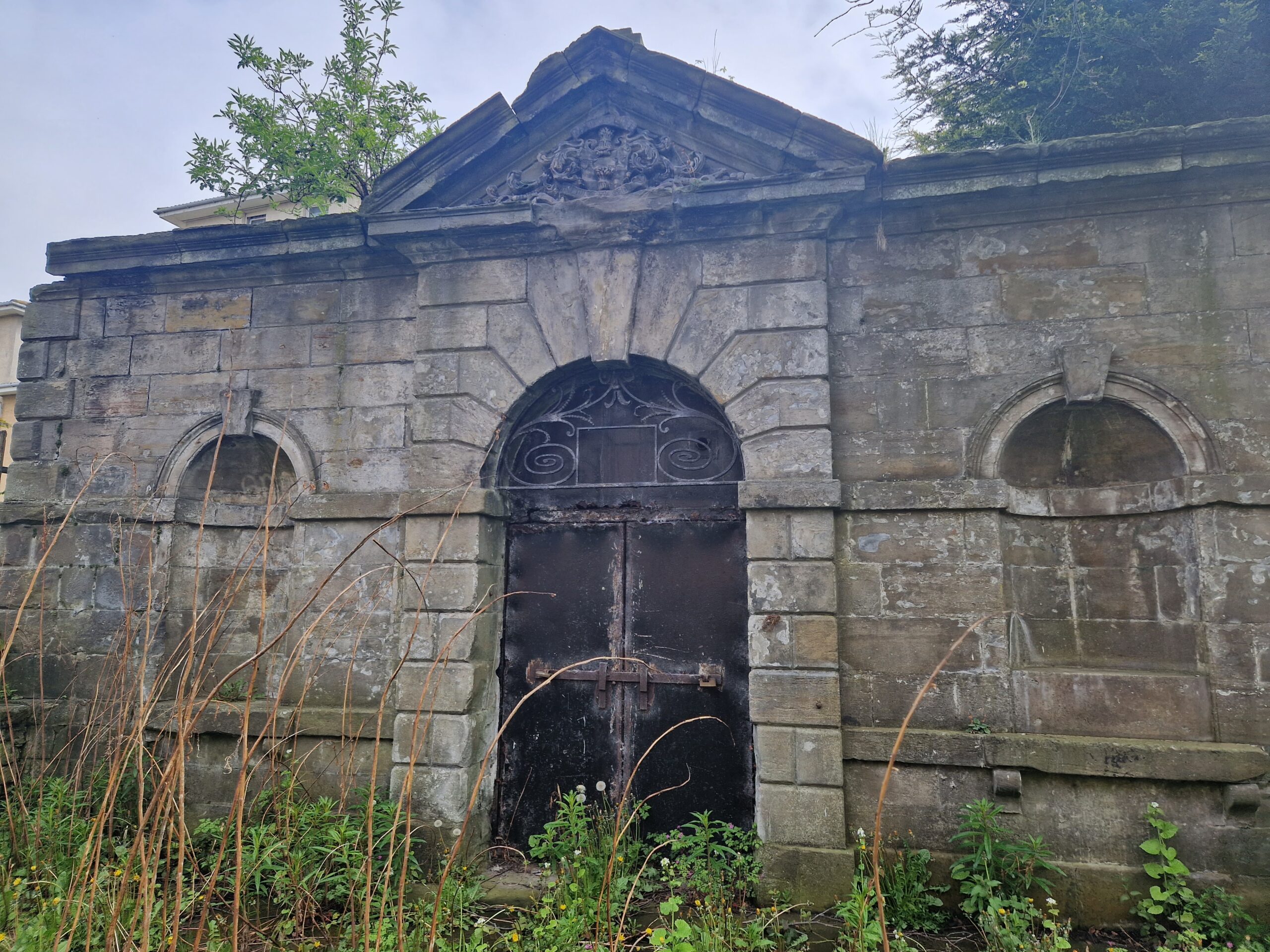
Niddrie Mausoleum, Image Credit: Steven Drew
Certainly, this place is known for being home to the famous medieval castle, Craigmillar Castle, however, I hadn’t heard of anything outside of that. I wondered what other interesting things might be around, perhaps hidden to the masses through a deep-rooted reputation that discouraged any exploration from non-locals. These wonders were answered with more interesting sites, such as the Niddrie standing stone – an ancient stone stood by the side of the pavement near a busy road, or the remaining foundations of an old icehouse found in Hunters Hall Park, believed to be part of the old Niddrie Marischal estate. And nearby that, there’s a mysterious and large concrete foot, known as Gulliver’s foot. This was unveiled by Scottish legend Billy Connolly back in 1978 and was originally part of a much larger sculpture – among the largest concrete sculptures in Europe at one time. Safe to say, it became clear that Niddrie was much more than its reputation implied.
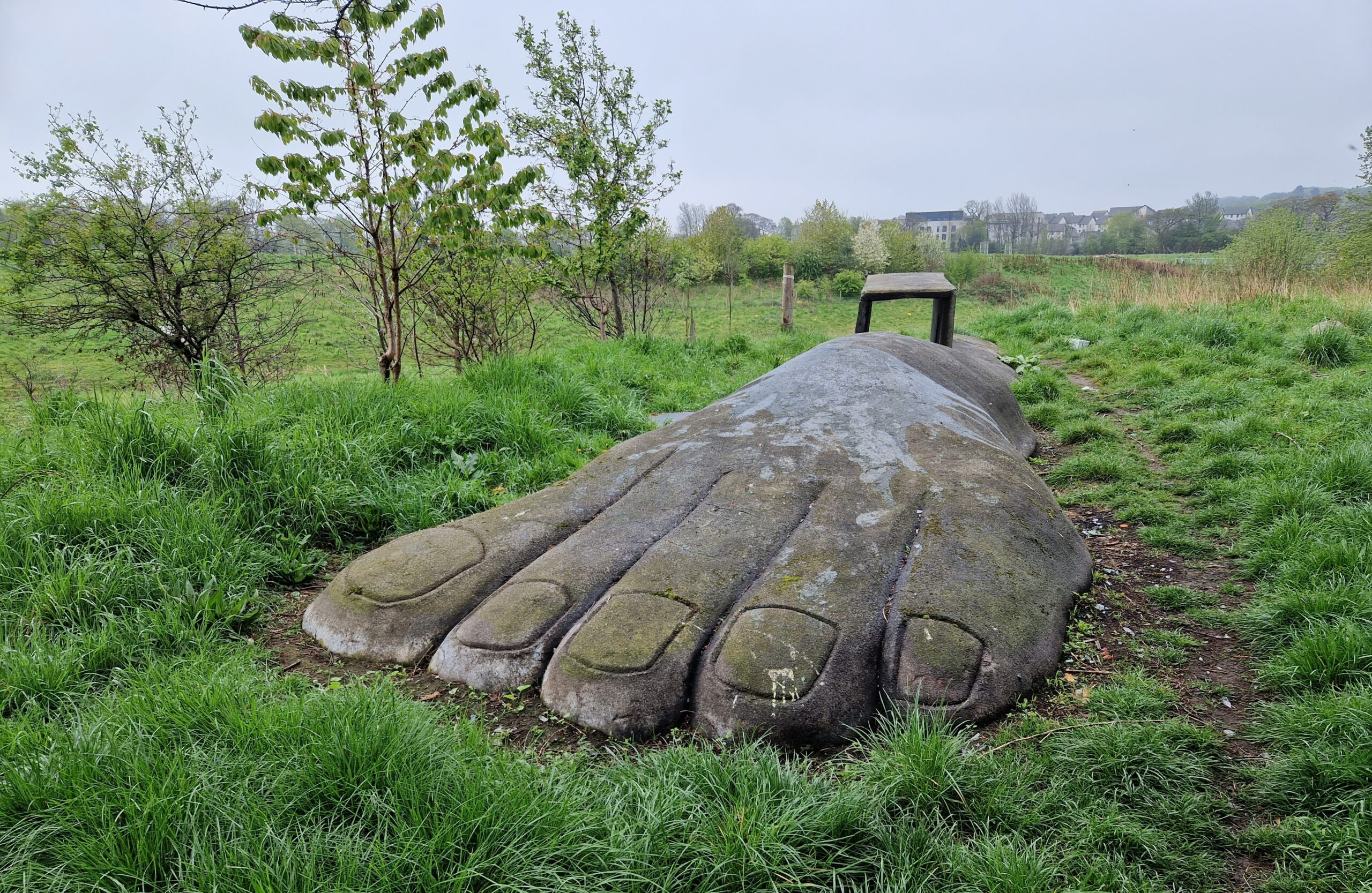
Gulliver’s foot, Image Credit: Steven Drew
This misrepresentation of the area was something I found myself exploring again years later through my work with Scotland’s anti-poverty network, the Poverty Alliance. There, I support the End Poverty Edinburgh citizen group, who works with the City Council and other agencies to support and hold the city to account in its commitment to reduce poverty. Ultimately, we value involving the voices of lived experience of poverty in the decisions that affect them. Two members with long histories in Niddrie decided they were tired of the reputation it had, and together we created a short film acknowledging its challenges, while highlighting the many great things it has going for it.
As group member Darren narrates in that video, ‘Niddrie’ likely conjures up thoughts of poverty and hard times, amongst other things. And it’s true that these are part of its story, however, these aren’t the story. Indeed, the injustice of poverty undoubtedly has a tight grip on the area, but this does not define it. As Darren describes, Niddrie is home to real strength; Neighbours who look out for each other, families holding it together through the hardest of times, and volunteers who show up day after day to offer hope when people need it most. Niddrie and Craigmillar’s loud yet narrow reputation fails to capture these aspects; elements that are likely integral to its story, just as it fails to acknowledge many of the historic sites mentioned earlier. Perhaps one day, these community strengths will be represented through place names around the area, telling that story, just like those mentioned earlier remind us of its past today.
Steven Drew, Community Participation Officer, Poverty Alliance
______________________________________________________________________
Endnote
One of the important messages from Steven’s article is that heritage can be leveraged to build strength, confidence and pride in place. In doing so, it can help represent communities in more positive ways and challenge stereotypes. The Cockburn Association’s mission is to galvanise civic action to inspire stewardship, ownership, access and appreciation of Edinburgh’s heritage. There are many ‘Edinburghs’ and our remit extends to the whole city, not just the parts that make the tourist brochures. Investing in communities takes diverse forms and The Cockburn looks forward to working with new partners to build on this work in the years to come.
Images: Steven Drew