
Coltbridge Terrace
Posted on: January 6, 2026
Support extra-care use, but scale, tree loss, impacts unacceptable.
Address: 11 – 15 Coltbridge Terrace Edinburgh EH12 6AB
Proposal: Proposed conversion and change of use with associated demolition and new build development to deliver Extra Care Community
Reference No: 25/06035/FUL
Closing date for comments: Mon 05 Jan 2026
Determination date: Fri 16 Jan 2026
Result: Pending
Cockburn Response
The Cockburn Association welcomes the opportunity to comment on this proposal for an extra-care community at 11–15 Coltbridge Terrace. We recognise the social value of providing accommodation that allows people to live independently with support, and we appreciate the intention to bring the C-listed Lansdowne House back into meaningful use. The removal of later additions of little merit, together with plans to repair the house and retain the Gate Lodge, is encouraging and reflects a heritage-led approach that we support in principle.
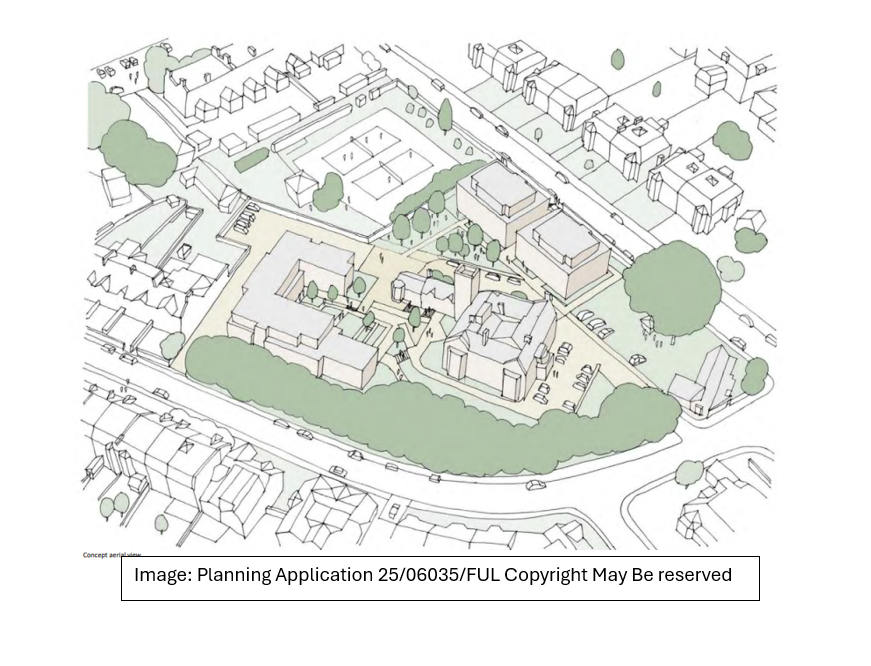
However, despite these positive elements, we are concerned that the overall scale and intensity of the development goes well beyond what this sensitive site and its Conservation Area setting can comfortably accommodate. The new buildings proposed along Henderland Road and within the former grounds of Lansdowne House are substantial structures. Even with attempts to break up the rooflines or to step back upper storeys, they read not as villas but as modern multi-unit apartment blocks, and their combined mass diminishes the visual prominence of the listed building, which was historically the centrepiece of its landscape. The grain of the area, consisting of large villas in generous, well-treed grounds, does not naturally lend itself to the level of built form now proposed.
This point is closely tied to the landscape impacts, and here the proposals raise particular alarm. The removal of 29 trees, including several Category A and B specimens, is a significant change to the character of the Conservation Area. These mature trees form an essential part of the visual and environmental fabric of Coltbridge and Wester Coates. While replacement planting is offered and canopy calculations are provided, it is difficult to accept that saplings will, in the short or medium term, compensate for the loss of mature canopy that has defined this corner of the city for generations. A Conservation Area is designated in recognition of such qualities, and once they are eroded they are not easily restored.
Although the landscape plans are attractively presented, the cumulative effect of the works, including regrading, engineered surfaces, a sizeable access route and new terraces, shifts the character from that of a historic villa garden towards something more akin to a semi-urban compound. In winter, when foliage is thin, the new Building C will be considerably more visible from Coltbridge Terrace than suggested by the submitted images. Despite sitting broadly on the footprint of Lansdowne Modern, it appears taller and more assertive in scale, altering the pleasant openness that has long characterised this part of the street.
There are also concerns about circulation and the demands placed on surrounding roads. Extra-care accommodation, even with limited parking, typically generates frequent staff, visitor and service trips. Coltbridge Terrace is narrow, with limited capacity for manoeuvring service vehicles, and it is hard to see how this increased intensity of movement would sit comfortably here. The internal shared-surface design may function within the development, but it risks creating a level of activity unfamiliar to a quiet residential enclave.
Taken together, the scheme suggests a level of intensification that is at odds with the established character of the Conservation Area. We are mindful too of precedent. Approving proposals of this scale risks inviting similar forms of overdevelopment elsewhere in the wider Murrayfield and Wester Coates area. Conservation Areas rely on clear, consistent expectations about density, built form and landscape character. If those expectations are diluted here, it becomes more challenging to defend them elsewhere.
Although the sustainability documentation is extensive and contains a number of positive measures, the project remains heavily reliant on substantial demolition and new-build construction, with a consequential embodied carbon burden. A more modest approach, one that retains more of the existing landscape, reduces building mass and places greater emphasis on sensitive adaptation, would sit more comfortably with the aspirations of NPF4 and with the long-standing civic desire to conserve the character of this part of the city.
For these reasons, while we support the restoration of Lansdowne House and accept the principle of an extra-care use, we believe the development as currently conceived is too large and too impactful for its location. We would encourage a significant reduction in scale and massing, a more ambitious retention of mature trees and a landscape approach that restores the spacious, leafy character for which the Conservation Area is valued. Without these revisions, we are unable to support the application.